
15 Famous Buildings in Barcelona You Shouldn’t Miss

Barcelona is famous for its incredible architecture, from Antoni Gaudí’s colorful creations to historic Gothic landmarks.
I live in Barcelona, and I’m still impressed by how many unique buildings there are to discover.
In this guide, I’m sharing 15 famous buildings in Barcelona that are worth adding to your itinerary, including some of the city’s most iconic landmarks and a few lesser-known favorites.
Even if you’re not particularly interested in architecture, I think you’ll be impressed by these incredible buildings!
Famous Buildings in Barcelona
These are the most famous buildings in Barcelona that shouldn’t be missed:
1. La Sagrada Família


📍 Location: Google Maps
La Sagrada Família is definitely the most famous building in Barcelona and one attraction you absolutely shouldn’t miss.
Designed by Antoni Gaudí, construction on this incredible basilica began in 1882, and it became his life’s work. Unfortunately, Gaudí died in 1926 before he could see his masterpiece completed.
Located in the Eixample neighborhood, it’s one of the most iconic landmarks in Spain, known for its towering spires, intricate facades, and architecture inspired by nature.
Inside, you’ll find massive tree-like columns and colorful stained glass windows that fill the basilica with incredible light.
In 2026, the central Tower of Jesus Christ was completed, reaching 172.5 meters (~566 feet) and making La Sagrada Família the tallest church in the world.
However, the basilica itself is still not completely finished, with work continuing on other sections.
If you want to go inside, tickets must be booked on the official website several weeks in advance.
Tip: If tickets are sold out, check Viator or GetYourGuide for tours with last-minute availability.
2. Casa Batlló


📍 Location: Google Maps
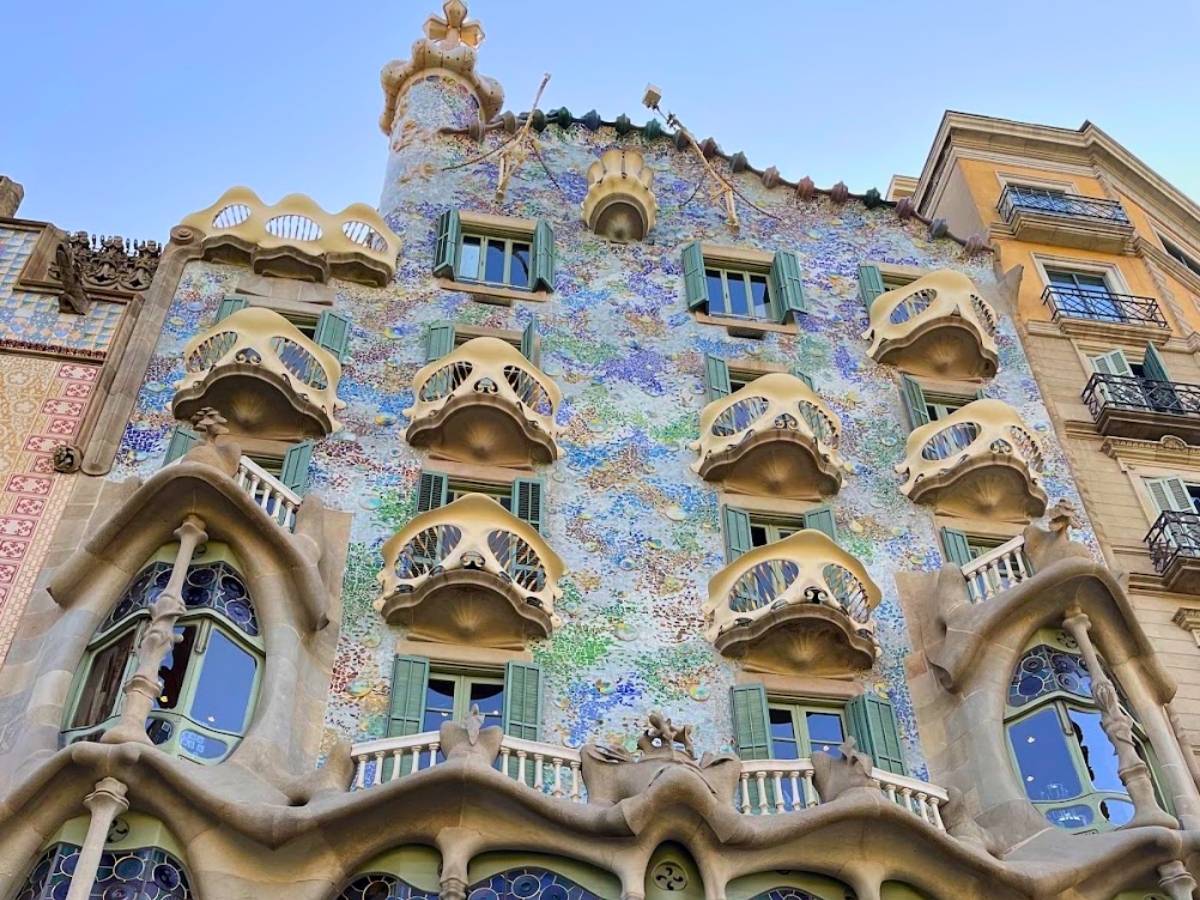
Located on Passeig de Gràcia, Casa Batlló is another famous Antoni Gaudí creation with a very whimsical feel.
Originally built as a private residence, the building was completely redesigned by Gaudí between 1904 and 1906 for the wealthy Batlló family.
Casa Batlló is sometimes called the “House of the Dragon” because of its colorful, scale-like roof that resembles a dragon’s back.
The facade is also covered in colorful mosaics, curved skull-like balconies, and unique architectural details.
Today, you can tour the inside of Casa Batlló to see Gaudí’s creative designs up close, including the famous blue-tiled staircase and rooftop terrace.
It’s actually my favorite Gaudí house in Barcelona, and I’d highly recommend booking tickets to visit the interior if you have time!
3. Palau de la Música Catalana


📍 Location: Google Maps
Located near the Gothic Quarter and El Born, Palau de la Música Catalana is one of Barcelona’s most impressive buildings and a UNESCO World Heritage Site.
Designed by Catalan architect Lluís Domènech i Montaner in the early 1900s, this famous concert hall is known for its colorful mosaics, detailed sculptures, and incredible stained glass ceiling.
It’s honestly one of the most beautiful concert halls I’ve ever seen!
You can take a guided or self-guided tour to explore the building, but I’d also recommend checking the performance schedule to see if you can catch a concert while you’re in Barcelona.
The venue hosts everything from classical music and guitar performances to flamenco shows, so there are lots of opportunities to experience this incredible space.
Plan your trip in minutes with my pre-pinned Google Map filled with the best attractions, restaurants, bars, shopping, and hidden gems in Barcelona.
- 100+ pre-pinned places so you don’t waste hours planning
- Filter by category to find food, sights, and local favorites
- Personal notes with insider tips for each spot
4. Casa Milà (La Pedrera)


📍 Location: Google Maps
Located on Passeig de Gràcia, Casa Milà is another famous Antoni Gaudí building known for its unique stone facade and curved balconies.
Also called La Pedrera (meaning “The Stone Quarry”), the building was designed by Gaudí in the early 1900s and is known for its wave-like exterior and detailed wrought iron balconies.
Inside, you can explore a recreated apartment, learn about Gaudí’s architectural designs, and visit the attic with its unusual curved arches.
But the real highlight is the rooftop terrace, which features some of Gaudí’s most interesting designs, including warrior chimneys and incredible views of Barcelona.
You can book tickets to visit Casa Milà during the day or even book a special nighttime experience with rooftop projections.
Tip: If you’re really interested in Gaudí or just want an easy way to see most of his buildings in one day, check out my recommendations for the top Gaudí tours in Barcelona.
5. Casa Vicens


📍 Location: Google Maps
Located in the Gràcia neighborhood, Casa Vicens is another colorful Gaudí building and one of his earliest architectural projects.
Built between 1883 and 1885, it was Gaudí’s first major residential commission, designed as a summer home for Manuel Vicens i Montaner.
The building is known for its colorful ceramic tiles, geometric patterns, and unique mix of architectural styles that make it stand out from the other Gaudí buildings in Barcelona.
It’s a bit farther from the main tourist attractions, but still within walking distance of Casa Milà on Passeig de Gràcia.
Today, you can explore the interior on a self-guided visit or book a guided tour to learn more about Gaudí’s early designs.
6. Casa Amatller


📍 Location: Google Maps
Located right next to Casa Batlló on Passeig de Gràcia, Casa Amatller is another impressive Modernist building that often gets overlooked by visitors.
Designed by Catalan architect Josep Puig i Cadafalch in 1898, it was one of the first Modernist buildings on the famous “Manzana de la Discòrdia” block.
Inside, you can take an audio-guided tour of the beautifully preserved residence, complete with original furniture and decorations that show what life was like for a wealthy Barcelona family in the early 1900s.
And don’t forget to stop by the chocolate shop!
The Amatller family made their fortune in the chocolate business, and you can still buy their chocolates today or enjoy a cup of hot chocolate at the on-site cafe.
7. Sant Pau Recinte Modernista


📍 Location: Google Maps
Originally built as a hospital, Sant Pau Recinte Modernista is one of Barcelona’s most impressive architectural landmarks.
Designed by Lluís Domènech i Montaner (the same architect as Palau de la Musica Catalana), the complex features several Modernist buildings decorated with colorful mosaics, stained glass windows, and intricate details.
What’s really interesting is that the buildings are connected by underground tunnels that were once used to transport patients between hospital wards.
Today, you can explore the historic buildings, walk through the underground tunnels, and see recreations of the original hospital wards to get a glimpse of what the hospital was like when it was still operating.
It’s definitely one of the best hidden gems in Barcelona and a place I’d highly recommend visiting!
8. Barcelona Cathedral
📍 Location: Google Maps
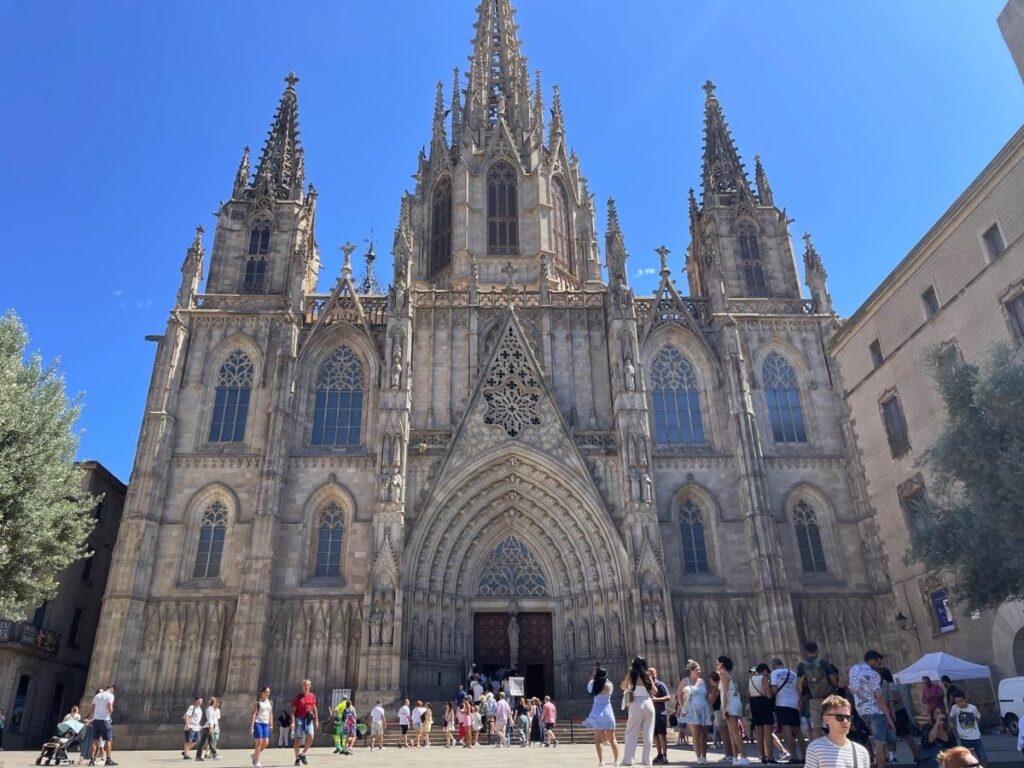
Located in the heart of the Gothic Quarter, Barcelona Cathedral is one of the most famous churches in Barcelona, known for its impressive Gothic architecture and towering spires.
Also known as the Cathedral of the Holy Cross and Saint Eulalia, it was built between the 13th and 15th centuries.
One of the most interesting features is the courtyard, where 13 white geese live in honor of Saint Eulalia, who was martyred at the age of 13.
You can explore the interior with an audio guide (bring your own headphones!) and head up to the rooftop for incredible views of Barcelona.
There’s an entrance fee, and you’ll need to dress appropriately with your shoulders and knees covered.
9. Palau Guell

📍 Location: Google Maps
Located just off La Rambla in the El Raval neighborhood, Palau Güell is another famous Antoni Gaudí building that was commissioned by wealthy businessman Eusebi Güell in the late 1800s.
While the exterior is more understated than some of Gaudí’s other creations, the interior is full of impressive architectural details.
One of the highlights is the grand central hall, which features a towering dome, an organ, and intricate decorations.
You can also explore the family’s former living quarters, with stained glass windows, ornate ceilings, and detailed woodwork.
The basement is also interesting, with large stone columns and vaulted ceilings that originally served as the family’s stables.
And don’t miss the rooftop terrace, where you’ll find colorful mosaic-covered chimneys and great views of Barcelona.
10. Torre Glories

📍 Location: Google Maps
Formerly known as Torre Agbar, Torre Glòries is one of Barcelona’s most recognizable modern buildings, standing 144 meters (472 feet) tall with 38 floors.
Designed by French architect Jean Nouvel and completed in 2005, this unique skyscraper is known for its rounded, bullet-shaped design and colorful exterior.
The facade is covered in thousands of glass and aluminum panels, with more than 4,500 LED lights that illuminate the building in different colors at night.
While most of the building is used as office space, you can book tickets to visit the Mirador Torre Glòries observation deck on the 30th floor for panoramic views of Barcelona.
It’s a fun option if you’re looking for a different perspective of the city.
11. Temple of the Sacred Heart of Jesus


📍 Location: Google Maps
Located at the top of Tibidabo mountain, the Temple of the Sacred Heart of Jesus is one of Barcelona’s most impressive churches, with some of the best views of the city.
The church features a mix of architectural styles, with towering spires, detailed stonework, and a large statue of Jesus at the very top.
You can explore the inside for free, where you’ll find beautiful stained glass windows, colorful mosaics, and ornate decorations.
But the real highlight is the viewpoint! You can pay a small fee to take an elevator up to the upper terraces for incredible panoramic views of Barcelona.
To get to Tibidabo, you can take public transportation followed by a funicular ride up the mountain.
There’s also a historic amusement park right next to the church that’s worth checking out while you’re there.
12. Montjuic National Palace


📍 Location: Google Maps
Located on Montjuïc hill, the National Palace of Montjuïc is one of Barcelona’s most impressive buildings and home to the Museu Nacional d’Art de Catalunya (MNAC).
Built for the 1929 International Exposition, this grand palace features a massive central dome, towering columns, and beautiful architecture overlooking the city.
Today, it houses one of the largest art museums in Barcelona, with collections spanning Romanesque, Gothic, Renaissance, Baroque, and modern art.
Even if you don’t plan to visit the museum, I’d highly recommend walking up to the palace to admire the building and enjoy the incredible panoramic views of Barcelona from the terraces.
13. Camp Nou

📍 Location: Google Maps
If you’re a soccer (football) fan, Camp Nou is definitely worth adding to your Barcelona itinerary!
Home to FC Barcelona, Camp Nou is one of the most famous soccer stadiums in the world and was historically the largest in Europe, with a capacity of nearly 100,000 spectators.
The stadium has been undergoing a major renovation, but FC Barcelona returned to playing matches here in November 2025. Construction is still ongoing, so seating capacity remains limited.
You can also book Camp Nou Experience tickets to visit the Barça Museum and see the stadium, although tour access may vary during renovations.
14. Casa de Les Punxes

📍 Location: Google Maps
Located on Avinguda Diagonal in the Eixample neighborhood, Casa de les Punxes is a unique Modernist building that kind of looks like a medieval castle.
Built in the early 1900s, it was designed by Josep Puig i Cadafalch (the same Catalan architect behind Casa Amatller).
Its name translates to “House of Spikes,” referring to the pointed towers that give the building its distinctive appearance.
With its red brick facade, decorative details, and castle-like towers, it’s definitely one of the more unusual buildings you’ll see in Barcelona.
The building was previously open as a museum but is now primarily used for offices and private events.
While you generally can’t tour the interior, it’s still worth stopping by to admire the exterior.
15. Fundació Tàpies

📍 Location: Google Maps
Note: Fundació Antoni Tàpies is temporarily closed for renovations and is expected to reopen in early 2027. Check the website for current updates.
Located in the Eixample neighborhood, Fundació Antoni Tàpies is a contemporary art museum dedicated to the work of Catalan artist Antoni Tàpies.
The museum is housed in a historic Modernist building also designed by Lluís Domènech i Montaner, known for its red brick facade and unusual wire sculpture on the rooftop.
Inside, you’ll find a collection of Tàpies’ paintings, sculptures, and other artwork, along with temporary exhibitions featuring contemporary artists.
It’s worth checking out if you’re interested in modern art or want to see another unique Modernist building in Barcelona.
Final Thoughts: Famous Buildings in Barcelona
Barcelona is home to some incredible architecture, from Gaudí’s famous creations to lesser-known Modernist buildings that are just as worth exploring.
If it’s your first time visiting, I’d prioritize La Sagrada Familia, Casa Batlló, and Casa Milà, but don’t overlook places like Palau de la Música Catalana and Sant Pau Recinte Modernista.
For any buildings you plan to visit inside, I’d recommend booking tickets online in advance. They’re usually cheaper than buying them at the door.
And even if you don’t have time to tour every building, you can still admire so much of Barcelona’s incredible architecture just by walking around the city!
READ NEXT:

