
How to Get Around in Barcelona Spain in 2026


Planning a trip to Barcelona and wondering how to get around the city? You’ve come to the right guide!
As a travel blogger that lives in Barcelona, I’ve spent plenty of time figuring out the best ways to navigate the city.
In this guide, I’ll walk you through all the Barcelona transportation options so you can get around easily and make the most of your time here.
Whether you’re staying for a weekend or a longer trip, these tips will help you explore Barcelona like a local.
Ready to find out how to get around in Barcelona? Let’s get started!
Best Ways to Get Around in Barcelona
These are the most popular ways to get around in Barcelona:
Walking
Barcelona is an extremely walkable city and if you stay in the city center, you’re most likely going to be able to get to most places on foot. In fact, walking is often much faster than taking public transportation!
La Rambla, the Gothic Quarter, El Born, and Barceloneta are all popular areas for tourists and can easily be explored on foot.
Not only is walking a great way to save money on transportation, but it also allows you to stumble upon Barcelona hidden gems and beautiful architecture that you might otherwise miss.
Just be cautious when walking through crowded areas like La Rambla, La Boqueria, the Barcelona Cathedral, or near Plaça Cataluyna, as pickpocketing in Barcelona is unfortunately common.

Public Transportation
Barcelona has an extensive public transportation system known as Transports Metropolitans de Barcelona (TMB) that includes a metro, buses, trams, trains, and more.
Here’s what to know about the different public transportation services:
Metro
The Barcelona metro network is a subway system that is fast, efficient, and very easy to use. I’ve found it much easier to navigate than a lot of other big cities!
There are currently 8 Barcelona metro lines, which are color-coded and typically start with the letter “L”. You can view a printable version of the Barcelona Metro map here.
Metro stations have a red diamond-shaped sign with “M” on them and are located all over the city. Just look for the stairs or elevators to go underground!

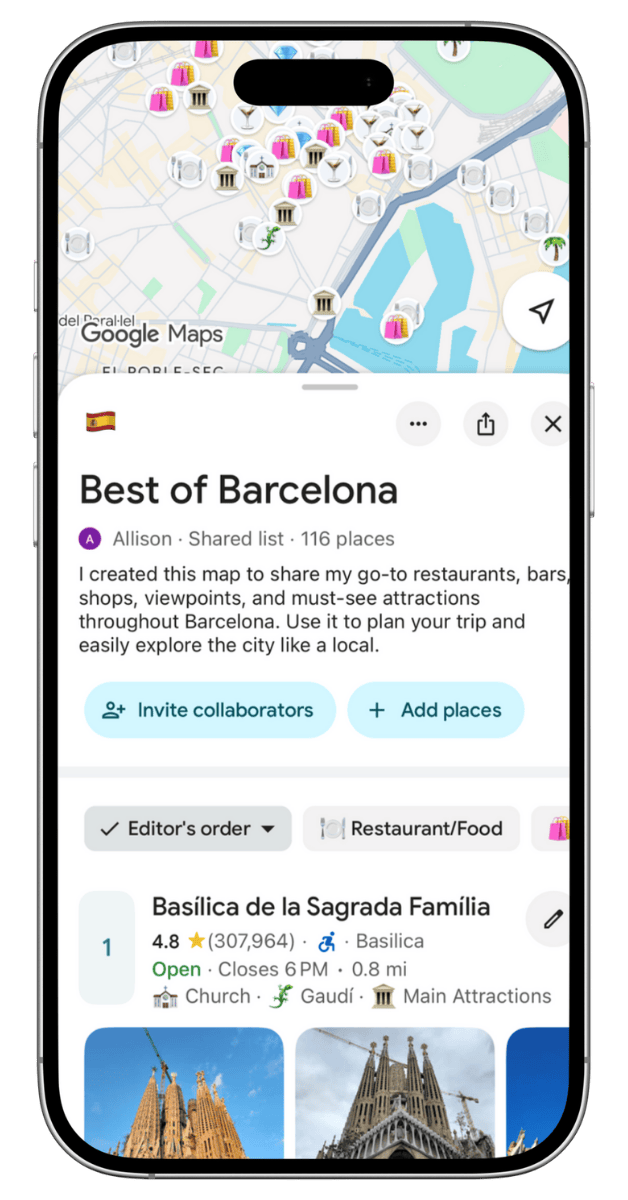
Plan your trip in minutes with my pre-pinned Google Map filled with the best attractions, restaurants, bars, shopping, and hidden gems in Barcelona.
- 100+ pre-pinned places so you don’t waste hours planning
- Filter by category to find food, sights, and local favorites
- Personal notes with insider tips for each spot
How to Navigate the Metro
I’ve found the easiest way to manage Barcelona’s metro system is just to plug your destination into Google Maps, which will give you detailed directions on which lines to take and where to get off or transfer.
You can also download the TMB App to navigate your route, check schedules, and manage your tickets. However, I’ve found it to be a bit glitchy.
Basically, once you arrive to the station and purchase your ticket (more about that below), you’ll scan your card to go through the automated gates.
Then you’ll need to figure out which direction you’re heading in and then follow the signs to the correct platform. The signs are pretty easy to understand and will show you all of the stops on that direction of the line.

Barcelona Metro Schedule
What’s important to know is that the Barcelona metro system does not operate 24 hours a day. The current schedule is as follows:
- Monday to Thursday: From 5AM to midnight
- Fridays: From 5AM-2AM
- Saturdays: From 5AM with continuous service throughout Saturday to Sunday night
- Sundays: Continuous service throughout Saturday to Sunday night and ends at midnight on Sunday
Note schedules are also modified for public holidays. Basically, if you’re staying out after midnight from Monday-Thursday (or after 2AM on Fridays), you’ll need to take the bus or alternative transportation instead.

Buses
Barcelona buses are also a great way to get around the city. The bus lines cover most areas and run frequently (though they can be a bit slower than the metro with traffic).
The Barcelona bus system is included with TMB’s integrated ticket system, so if you purchase a metro ticket, you can also use it for the bus.

How to Navigate Buses
Again, Google Maps is your best bet for figuring out which bus to take. Bus stops are typically covered and will have signs with the different bus numbers on top, as well as an electronic board with estimated arrival times.
Once you board the bus, you’ll need to scan your TMB card on the reader located behind the bus driver. Some buses also have card readers towards the back of the bus that you can use.
This is something that’s a bit different as there’s also another reader located next to the driver and this is where you can pay with a credit card.
Then when you’re on the bus, I would recommend monitoring your journey on Google Maps so you know when you’re getting close to your stop.
Before your upcoming stop, you’ll need to press one of the red buttons located on the poles to signal for the bus to stop. This is important because the bus won’t automatically stop unless a stop is requested!
Head to the back doors and when the bus comes to a stop, press the green button on the door to open it and exit.

Barcelona Bus Schedule
Buses in Barcelona typically operate 24 hours a day, 7 days a week. However, some routes run less frequently after certain hours.
You can check the schedule for each bus line on the TMB App or by using Google Maps.
Trams
Barcelona also has a tram network, though these primarily serve the outskirts of the city.
The Tram route provides easy access to Barcelona’s major shopping areas and residential zones, connecting the city with the towns in the metropolitan area.
There are 2 Barcelona Tram lines: the Trambaix (T1, T2, T3) and the Trambesòs (T4, T5, T6).
If you’re staying in the city center, you likely won’t need to use these services as much.

FGC Trains
FGC (Ferrocarrils de la Generalitat de Catalunya) trains are run by a different company than the metro and primarily serve the surrounding areas of Barcelona and zones outside of the city.
FGC operates urban train lines L6, L7, L8, and L12, along with several interurban and regional lines. They also manage the Esparraguera aerial cable car, the Núria and Montserrat rack railways, the Lleida to la Pobla de Segur train, and the Pobla de Lillet tourist railway.
Most tourists probably won’t need to use these services, but they do operate the R5 train, which can be taken to get to Montserrat.
Tickets for FGC trains can be purchased at machines or at the ticket counter at an FGC station like Plaza Espanya or Plaza Catalunya. If you’re heading to zones outside of Zone 1, you’ll need to purchase a different ticket, as a standard TMB card does not cover these rides.

Rodalies Trains
Rodalies (Cercanias) trains are operated by the Spanish national rail company, Renfe, and serve destinations outside of Barcelona.
These are the “R” trains (R1, R2, R3, etc) and can be useful if you’re planning on taking any day trips from Barcelona to nearby destinations like Sitges or Blanes.
Tickets for Rodalies trains can be purchased at the orange machines in Renfe train stations like Barcelona-Sants, Arc de Triomf, Passeig de Gràcia, Plaça de Catalunya, or Estació de França.
Tip: You can also download the Renfe Cercanias app to buy tickets and check schedules.

Taxis
Taxis are another popular transportation option in Barcelona, and are available all over the city.
You can easily hail taxis from the street or find them at designated taxi stands. Taxis in Barcelona are black and yellow and have a green light on top when they’re available for hire.
Prices are metered and the fares are pretty affordable, with cash or credit cards accepted for payment.
I’ve taken a lot of taxis by myself in Barcelona and have always felt safe. Most taxi drivers speak at least basic English but you can always show them where you’re going on your phone if there’s any confusion.

Ride-Sharing Services
Ride-sharing services are also available in Barcelona and can be convenient for requesting on-demand rides, especially for airport drop-offs or late-night travels.
These are the most popular ride-sharing services available in Barcelona:
- Uber: Uber is available in Barcelona but it’s not widely used due to legal issues and opposition from taxi drivers. You can try to use it but it’s usually pretty hard to find a ride. You’ll most likely have to choose a regular taxi but even those are difficult to get as well.
- FreeNow: This app is much more popular and personally what I use to order taxis in Barcelona. It’s similar to Uber but it connects you with traditional taxis instead of private cars. You can pay on the app and select a fixed price or a metered fare.
- Cabify: This is another ride-sharing service similar to Uber. It’s available in Barcelona but not as popular as FreeNow. Unfortunately, you need a Spanish phone number to sign up for a Cabify account, so it really only works if you have a Spanish SIM card.

Biking
Biking is another great way to get around Barcelona, especially for short distances. The city has a bicycle-sharing system called Bicing, however it’s only available for residents.
If you’re not a resident, you can still rent a bike from a local bike rental shop.
Barcelona has designated bike lanes on many major streets and drivers in the city are generally respectful towards cyclists.

Barcelona Transport Cards
Here’s what to know about buying and using transport cards in Barcelona:
How to Buy a Barcelona Transport Card
Barcelona transport cards can be purchased at any metro station. There are red machines that say “Venda de Tiquets”, which allow you to purchase tickets with cash or credit cards.
The ticket machines are pretty straight-forward and once you begin the process, you can purchase one of the tickets as outlined below.
The machine will then issue you a paper card with your ticket loaded on it. These cards are reusable so hang onto it for the duration of your trip as you can top it up with additional rides or tickets if needed.
Tip: Make sure to press the British flag in the bottom right corner of the screen to change the language to English.

Types of Barcelona Transport Tickets
Barcelona’s public transport network uses an integrated fare system, letting you transfer for free within 1 hour and 15 minutes of validating your ticket across the various transport modes to reach your destination.
This means you can use the same Barcelona public transport ticket on the metro, bus, tram, FGC train, and Rodalies train as long as it’s within that time frame and within Zone 1.
Zone 1 covers pretty much all of central Barcelona and a few surrounding areas. You can view the zone map here but you probably won’t need to leave Zone 1 unless you’re taking day trips to nearby towns.
Here’s a breakdown of the different types of Barcelona metro tickets available for purchase:
- Single Ticket (2.65€): The single ticket option will allow you to make one trip (and any transfers within 1 hour and 15 minutes) on all operators in the Integrated Fare System.
- T-Casual Card (12.55€): This individual travel card allows you to make 10 journeys on all operators in the Integrated Fare System.
- T-Usual Card (22€): This holder-specific travel card allows you to make unlimited journeys for one month on all operators in the Integrated Fare System.
- 2 Day Hola Barcelona Card (18.70€): This travel card includes unlimited journeys on Barcelona’s public transport over 2 consecutive days, as well as public transportation from the airport.
- 3 Day Hola Barcelona Card (27.30€): This travel card includes unlimited journeys on Barcelona’s public transport over 3 consecutive days, as well as public transportation from the airport.
- 4 Day Hola Barcelona Card (35.60€): This travel card includes unlimited journeys on Barcelona’s public transport over 4 consecutive days, as well as public transportation from the airport.
- 5 Day Hola Barcelona Card (43.60€): This travel card includes unlimited journeys on Barcelona’s public transport over 5 consecutive days, as well as public transportation from the airport.

Should You Buy an Hola Barcelona Card?
If you’re planning on using public transportation frequently while visiting Barcelona, it may be worth purchasing the Hola Barcelona Travel Card.
The 2-5 day options provide unlimited travel and also include transportation from the Barcelona airport, making it a convenient and cost-effective option.
However, if you only plan on taking a few trips on public transport or will primarily be walking around the city, a single ticket or T-Casual ticket may be a better option for you.
I personally use the T-Casual card and then just reload it when the 10 rides run out. You can do this at any ticket machine in a metro station or on the TMB app.
Alternatively, another option is to buy the Barcelona Card, which includes public transportation, as well as discounts on tourist attractions and activities like Casa Batlló, Casa Milà, and several art museums in Barcelona.

How to Use Your Barcelona Transport Card
Once you’ve purchased your ticket from the machine, head over to the entry gates with the glass doors.
For T-Casual, T-Usual, and Hola Barcelona Cards, you’ll just have to tap the card on top of the card reader and the doors will automatically open.
For single tickets, you’ll need to insert the card into the slot located below the reader.


Tips for Taking Transportation in Barcelona
Follow these tips to make the most out of your experience using Barcelona’s public transportation network:
- Plan your route: Before heading out, plan your route using Google Maps or the TMB app. This will save you time and confusion.
- Consider purchasing the Barcelona Card: If you’re planning on doing some heavy sightseeing in Barcelona, it may be worth purchasing the Barcelona Card, which includes public transportation and discounts on attractions.
- Be aware of pickpockets: While Barcelona is generally a safe city, pickpocketing is unfortunately common on public transportation in Barcelona. Keep your belongings close to you and be aware of your surroundings, especially on the metro. Pickpockets are known to crowd the doors and quickly snatch valuables and run off as the doors close.
- Use a phone leash: I’d highly recommend picking up an inexpensive phone leash before your trip to Barcelona. This handy cord attaches to your phone and can be wrapped around your wrist, or attached to your belt loop or purse, making it harder for pickpockets to grab your phone.
- Download the FreeNow App: The FreeNow app allows you to call a taxi directly from your phone, making it a convenient way to request on-demand rides.

Getting Around in Barcelona: FAQs
Here are the answers to some of the most frequently asked questions about getting around in Barcelona:
What’s the cheapest way to get around in Barcelona?
The cheapest way to get around in Barcelona is by using public transportation, which is very convenient and affordable.
Is Barcelona a walkable city?
Yes, Barcelona is a very walkable city and it’s very easy to explore the main attractions on foot. You can easily reach the beach, Gothic Quarter, and other popular areas by walking.
Are taxis safe in Barcelona?
Yes, taxis are generally very safe in Barcelona. Prices are metered so you won’t have to worry about being overcharged.
Is it necessary to tip taxi drivers in Barcelona?
No, tipping is not expected or required for taxi drivers in Barcelona.
Can you pay for taxis in Barcelona with a credit card?
Yes, pretty much all taxis in Barcelona accept credit cards for payment.
Is it safe to walk around Barcelona at night?
Yes, it is generally safe to walk around Barcelona at night, especially in well-lit and busy areas. However, it’s always wise to stay alert and avoid less populated streets.
Is it safe to take the metro in Barcelona?
Yes, the metro is a safe form of transportation but you’ll want to be very aware of your belongings to avoid pickpocketing in Barcelona.
Final Thoughts: Barcelona Transportation Guide
I hope this guide has helped you understand the different transportation options available in Barcelona and how to use them.
I know it’s a lot of information to digest but once you get the hang of it, the transportation system in Barcelona is very convenient and easy to use.
Google Maps will be your best friend and is the best way to plan your route and navigate the public transportation system.
Just be cautious of pickpockets and be aware of your surroundings, and you’ll more than likely have a smooth and enjoyable experience getting around in Barcelona!
READ NEXT:

