
These 9 Gaudí Buildings in Barcelona Look Straight Out of a Dream

Some buildings in Barcelona look so unusual that it’s hard to believe they’re actually real, and Antoni Gaudí is the genius behind them.
With colorful mosaics, twisting towers, and rooftops that look like something out of a fantasy movie, his designs are unlike anything else in the world.
From his most famous masterpieces to a few lesser-known gems, here are 9 incredible Gaudí buildings in Barcelona that you have to see to believe.
1. La Sagrada Familia


At the top of the list has to be La Sagrada Família, Gaudí’s most famous masterpiece and a building that looks almost too extraordinary to be real.
More than 140 years after construction began, it’s now the tallest church in the world, with towering spires, intricate carvings, and facades filled with symbolism.
But the interior is just as incredible! Massive columns branch out like trees, while colorful stained glass fills the space with rainbow light.
I’ve visited several times, and I’m still amazed by the incredible amount of detail Gaudí put into every corner of this architectural masterpiece.
2. Casa Batlló


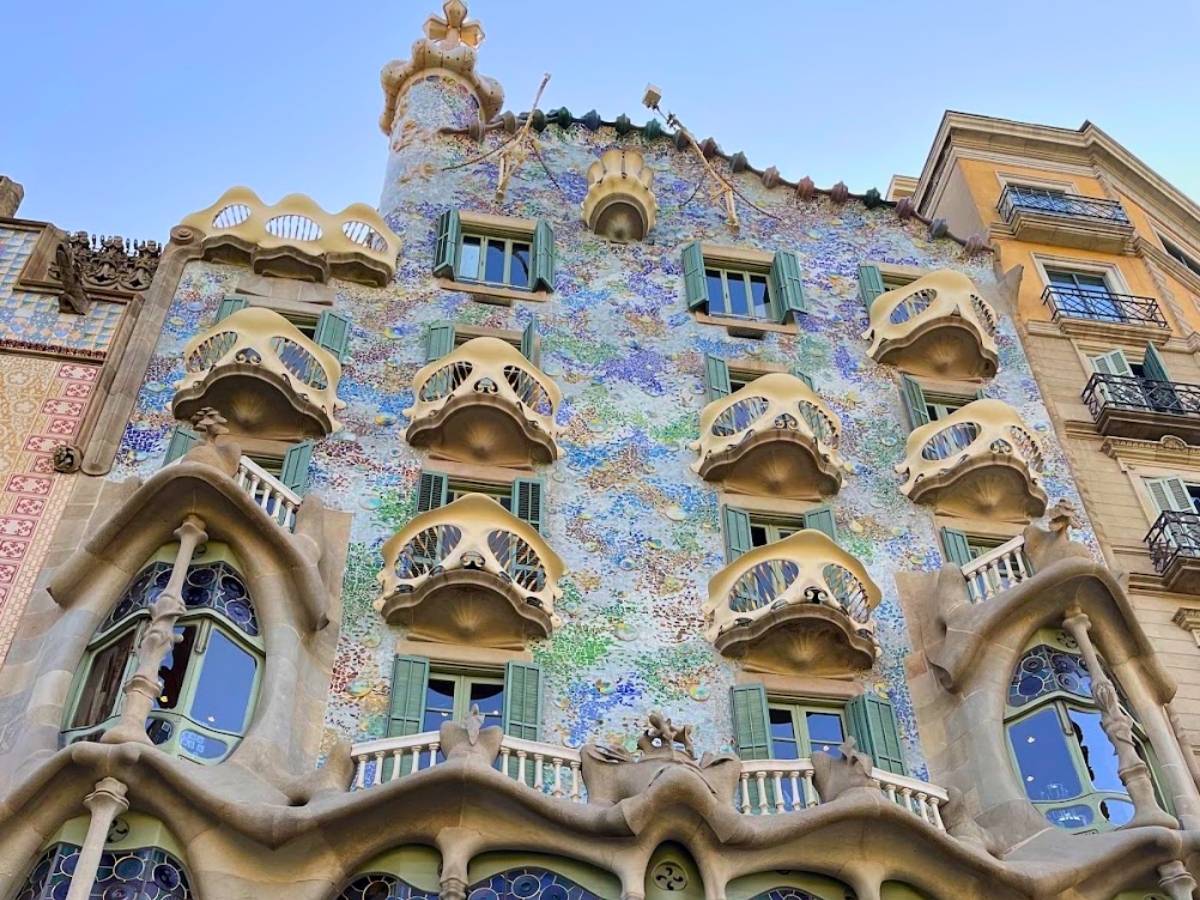
Casa Batlló looks like something straight out of a fairy tale, with colorful mosaics, balconies that resemble bones, and a rooftop covered in colorful dragon scales.
Redesigned by Gaudí in 1904, this former family home is one of his most whimsical creations, and it’s definitely one of my personal favorites!
The interior is just as imaginative, with flowing staircases, curved walls, and almost no straight lines.
Every little detail feels like it belongs in a fantasy world, and it’s incredible to think that this was once someone’s actual home!
3. Park Güell


Park Güell feels like stepping into a storybook, with colorful mosaics, unusual architecture, and incredible views over Barcelona.
Originally designed as a housing development, the park is filled with Gaudí’s playful creations, including the famous mosaic lizard known as El Drac and two fairytale gatehouses that look like gingerbread houses.
One of the most recognizable features is the winding mosaic bench, covered in colorful broken tiles and overlooking the city.
It’s such a fun example of how Gaudí blended architecture with nature, and the whole place feels like something out of a fantasy world.
4. La Pedrera (Casa Milà)


La Pedrera (also known as Casa Milà), might not be as colorful as Gaudí’s other creations, but its unusual architecture looks like something from another planet!
The building has a wavy stone facade with curved balconies that almost look like ocean waves, but the real highlight is the rooftop.
Here, you’ll find a collection of surreal chimneys shaped like warriors, giving the rooftop an almost sci-fi appearance.
Originally designed as an apartment building, La Pedrera is a great example of Gaudí’s creativity and his ability to turn even the most practical structures into works of art.
5. Casa Vicens

Casa Vicens looks like something out of an exotic fairy tale, with colorful tiles, intricate patterns, and architecture inspired by Asian and Middle Eastern designs.
Located in the Gràcia neighborhood, this was Gaudí’s first house project, and it looks completely different from his later creations.
When I visited Casa Vicens, I absolutely fell in love with the beautiful tilework, especially the little yellow flowers and teal leaves that decorate the walls.
The whole building is filled with incredible details, and it’s amazing to see how Gaudí’s imagination was already so apparent in his earliest work.
6. Torre Bellesguard


With its pointed towers, stone walls, and medieval castle-like appearance, Torre Bellesguard is unlike any of Gaudí’s other creations in Barcelona.
Located near Tibidabo, this lesser-known Gaudí creation combines Gothic architecture with his signature modernist details, giving it a completely different look from his other buildings.
The name means “beautiful view” in Catalan, and the rooftop offers incredible views of Barcelona stretching all the way to the sea.
My favorite detail is the clever rooftop design, where the corners of the building come together to resemble a dragon’s face.
7. Palau Güell

Hidden just off La Rambla, Palau Güell might look fairly ordinary from the outside, but step inside and you’ll discover one of Gaudí’s most unusual creations.
Designed as a private mansion for the wealthy Güell family, the building features dramatic interiors with dark wood, intricate ironwork, and a grand central hall topped by a beautiful dome ceiling.
But the real surprise is the rooftop, where colorful mosaic-covered chimneys look like something out of a fantasy movie.
It’s a completely different side of Gaudí’s architectural style, with a darker, more dramatic atmosphere than his later works.
8. Gaudí Crypt at Colonia Güell

The Gaudí Crypt in Santa Coloma de Cervelló is one of Gaudí’s most unusual creations, with leaning columns, curved brick arches, and colorful stained glass windows.
Originally intended to be part of a much larger church, only the crypt was completed, but it’s still an incredible example of Gaudí’s experimental architecture.
The uneven stone columns and organic shapes give the interior an almost cave-like appearance, while the colorful windows add a magical touch.
Gaudí actually used this project to experiment with architectural techniques he later incorporated into La Sagrada Família, so it’s a interesting glimpse into how his designs evolved.
9. Casa Calvet

Casa Calvet might be one of Gaudí’s more traditional designs, but look closely and you’ll spot some of his signature creativity hidden in the details.
Built for a wealthy textile manufacturer, the building features intricate stone carvings, curved iron balconies, and unusual decorative elements that give the facade plenty of personality.
Unlike his more colorful creations, Casa Calvet has a more elegant, understated appearance, but it’s still full of little surprises.

