
10 Days in Spain: The Perfect Itinerary for First-Timers


10 days in Spain is enough time to fall completely in love with this country–but only if you spend it in the right places.
I’ve lived in Barcelona for years, and this 10-day Spain itinerary is exactly what I would plan if I were planning my first trip to Spain.
It covers Barcelona, Madrid, and Seville with a day trip to Córdoba, connects entirely by high-speed train, and leaves enough breathing room to actually enjoy yourself.
In this guide, I’ll break everything down day-by-day so you know exactly what to do, see, and eat in each destination.
I’ll also share hotel recommendations, transportation tips, restaurant suggestions, and important advice for booking tickets and getting between cities. Let’s get into it.
My 10-Day Spain Itinerary at a Glance
This itinerary focuses on some of my favorite destinations in Spain and gives you enough time to experience each one without constantly packing up and moving hotels.
You’ll stay in the country’s three most iconic cities (Barcelona, Madrid, and Seville) and take advantage of Spain’s excellent high-speed rail network.
Here’s a quick overview of the route before we get into the details:
- Days 1-5: Barcelona (4 nights)
- Days 5-7: Madrid (2 nights)
- Days 7-10: Seville (3 nights) + Day Trip to Córdoba

Why I Recommend This Spain Itinerary
I recommend this itinerary because it gives first-time visitors a chance to experience several different sides of Spain without trying to cram too much into one trip.
It starts in Barcelona, continues to Madrid, and finishes in Seville, which is an easy north to south route on Spain’s high-speed rail network.
I recommend spending a little more time in Barcelona because there are more major attractions, great day trips, and beaches if you’re visiting during the warmer months.
Madrid offers a completely different experience as Spain’s sophisticated capital, while Seville gives you a chance to experience Andalusia (southern Spain), which is one of the most beautiful parts of the country.
You’ll also take a day trip to Córdoba to visit the Mezquita-Cathedral, which is one of the most famous monuments in Spain.
Most importantly, this itinerary only includes three cities (plus the day trip to Córdoba), which gives you enough time to enjoy each destination instead of constantly packing, unpacking, and moving hotels.

How to Get to Spain: Flights & Airports
Now let’s talk about flights, because that’s usually one of the biggest factors when planning a trip to Spain.
For this itinerary, I recommend flying into Barcelona-El Prat Airport (BCN) and flying home from Seville Airport (SVQ). This is known as an open-jaw or multi-city flight, which simply means you arrive in one city and depart from another.
Keep in mind that Seville is a smaller airport, so you’ll likely have a connection through Madrid or another European city on your way home.
If you’d prefer a nonstop flight back to the United States, another option is to take the high-speed train from Seville to Madrid and fly home from Adolfo Suárez Madrid-Barajas Airport (MAD).
You could also change up the order of this itinerary if the flights work out better. For example, you could fly into Barcelona, then fly on a budget airline (or take the train) to Seville, and then fly home from Madrid.

How to Book a Multi-City Flight (Open-Jaw)
The easiest way to search for an open-jaw flight is with Google Flights.
This allows you to compare flying into one city and home from another, instead of booking a standard round-trip ticket.
Here’s how to search for a multi-city flight on Google Flights:
- Go to Google Flights
- Change the trip type from “Round trip” to “Multi-city”
- Enter your first flight, such as your home airport to Barcelona (BCN)
- Enter your second flight, such as Seville (SVQ) to your home airport
- Add your travel dates and number of passengers
- Click search and compare the flight options
Once you select your desired flights, you’ll be given booking options to book on the airline’s website.

Quick Tip on Flight Timing
If you’re flying from the United States or Canada, keep in mind that most flights to Spain are overnight flights. You’ll typically leave in the evening and arrive in Europe the following morning.
This can create a challenge on arrival day because many hotels don’t allow check-in until mid-afternoon.
If you’re arriving early and know you’ll want to shower, nap, or go straight to your room after a long flight, consider booking your hotel for the night before your arrival.
Just be sure to contact the hotel ahead of time and let them know you’ll be checking in the following morning so they don’t mark you as a no-show.
How to Get Between Cities
For this itinerary, I strongly recommend traveling between cities by train rather than flying.
Spain has one of the best high-speed rail networks in Europe, and it’s usually faster and more convenient than dealing with airports, security lines, baggage restrictions, and transportation to and from the airport.
The main routes on this itinerary are Barcelona to Madrid and Madrid to Seville, both of which take about 2.5-3 hours by high-speed train.
Even better, train stations are located right in the city center, so you’ll arrive much closer to your hotel and major attractions.

Buying Train Tickets in Spain
Spain’s national railway company is Renfe, but you’ll also find trains operated by Iryo and Ouigo, which often offer lower fares on these routes.
I recommend using Omio to compare schedules and prices across all three companies in one place.
Once you find the train you want, you can either book directly through the train operator or pay a small additional fee to book through Omio for the added convenience.
For more details, check out my complete guide to buying train tickets in Spain, where I walk through the booking process step by step.
Tip: Book your train tickets as far in advance as possible. Prices can increase significantly the closer you get to your travel date.

Spain 10-Day Itinerary: Detailed Breakdown
Now let’s get into the day-by-day details of this Spain itinerary:
Day 1: Fly to Barcelona
Day 1 is all about settling into Barcelona and getting your first taste of the city.
You’ll spend the afternoon exploring the Gothic Quarter, one of Barcelona’s oldest neighborhoods, before enjoying tapas for dinner.
Day 1 Activities:
- Arrive in Barcelona: Most flights from North America arrive in Barcelona in the morning. After clearing immigration and collecting your luggage, I recommend taking a taxi to the city center and checking into your hotel or dropping off your bags if your room isn’t ready yet. You can also read my guide on getting from Barcelona airport to the city center for more budget-friendly options.
- La Rambla: Start your Barcelona sightseeing with a walk down the city’s most famous pedestrian street. While it’s very touristy, it’s worth seeing at least once and serves as a convenient route into the Gothic Quarter.
- La Boqueria Market: Just off La Rambla, this famous food market is a great place to grab a snack, fresh fruit juice, or browse local products. It’s one of Barcelona’s best local markets and an easy stop while exploring the area.
- Plaça Reial: This beautiful square is one of my favorite spots in the Gothic Quarter. It’s surrounded by palm trees, restaurants, and historic buildings and is a great place for photos.
- Barcelona Cathedral: Don’t confuse this with La Sagrada Familia. Located in the heart of the Gothic Quarter, Barcelona Cathedral is one of the city’s most impressive churches and is well worth a visit.
- Dinner at Tapeo: End your first day with dinner at Tapeo, which is one of my favorite tapas restaurants in Barcelona. I’d recommend making a reservation in advance, especially during the busy tourist season.


Day 2: Barcelona
Day 2 is all about experiencing some of Barcelona’s most famous attractions and getting to sample some local foods.
You’ll visit two of Antoni Gaudí’s greatest masterpieces before spending the evening eating your way through some of Barcelona’s best tapas bars.
Day 2 Activities:
- La Sagrada Familia: Start your day at Sagrada Familia, which is Barcelona’s most iconic landmark and officially the tallest church in the world. The most important thing to know is that you must book your tickets well in advance on the official website, as they regularly sell out and you can’t just buy them at the door. If official tickets are unavailable, you can also check Viator for last-minute availability.
- Lunch at Compà-Gràcia: After visiting La Sagrada Familia, make your way to Compà-Gràcia for lunch. This small Italian sandwich shop serves some of the best sandwiches in Barcelona and makes a convenient stop before heading to Park Güell. My personal favorite is the Sibari sandwich.
- Park Güell: Spend the afternoon exploring another one of Gaudí’s masterpieces. Famous for its colorful mosaics, whimsical architecture, and panoramic city views, Park Güell is one of the most unique places to visit in Barcelona. Tickets have a timed entry and must be purchased in advance on the official website at least a few days ahead of time.
- Barcelona Food Tour: In the evening, I’d highly recommend joining this Tapas, Taverns & History Tour by Devour Tours. This is one of my favorite food experiences in Barcelona and a really easy introduction to Catalan cuisine. You’ll visit several local tapas bars, sample traditional dishes and drinks, and learn more about Barcelona’s history and food culture from a local guide.


Day 3: Barcelona
Day 3 combines some of Barcelona’s best views with a few of my favorite local experiences.
You’ll spend time by the Mediterranean, explore Montjuïc Hill, and finish the day learning how to make one of Spain’s most famous dishes.
Day 3 Activities:
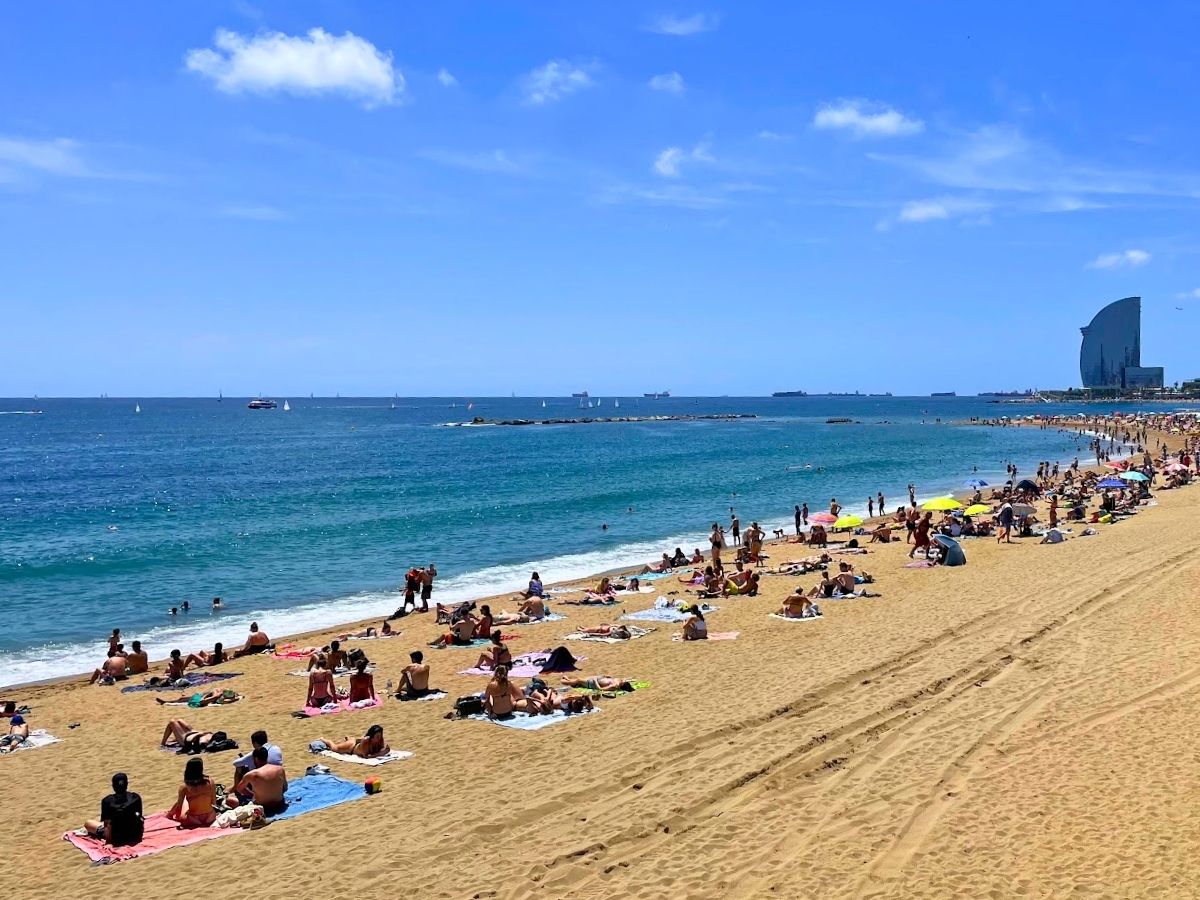
- Barceloneta Beach: Start your morning with a walk along Barceloneta Beach. Even if you don’t want to swim, there’s a nice beachfront promenade which is a great place for a stroll by the sea.
- Montjuïc Cable Car: From the beach, head down to the Port cable car station and ride the cable car up to Montjuïc, which is a famous hill in Barcelona with many different attractions. The views over the marina, city skyline, and Mediterranean Sea are incredible.
- Salts Bar: After arriving on Montjuïc, walk over to Salts Bar for a drink or light lunch. This casual bar overlooks the Olympic swimming pools and the entire city and is one of my favorite hidden gems in Barcelona.
- Montjuïc Cable Car to Montjuïc Castle (Optional): If you’d like to explore more of Montjuïc, you can take a second cable car up to Montjuïc Castle. The historic fortress was a military prison and offers even better views of the city.
- Montjuïc National Palace: Make your way down to the National Palace, home to the National Art Museum of Catalonia. Even if you don’t go inside, the building itself is incredibly beautiful and the steps in front are one of the best viewpoints in Barcelona.
- Paella Cooking Class: End the day with a paella cooking class at the Paella Club. This high-energy class is so much fun and hands down my favorite cooking experience in Barcelona. You’ll prepare your own paella in pairs, sip unlimited cava, and end the evening with a family-style dinner of everyone’s creations.


Day 4: Barcelona
Day 4 is your last full day in Barcelona and a chance to get outside the city for a few hours.
You’ll spend the morning exploring Montserrat before returning to Barcelona to see two of Gaudí’s most famous buildings and enjoy a great dinner.
Day 4 Activities:
- Day Trip to Montserrat: Located about an hour outside of Barcelona, Montserrat is a monastery built into the mountains. It’s known for its dramatic rock formations, hilltop monastery, and incredible views. The easiest way to get there is to book a guided tour, which includes all of your transportation and a local guide. It’s just a half-day tour so you’ll still have time to enjoy more of Barcelona in the afternoon.
- Casa Batlló: Once you’re back in the city, head to Passeig de Gràcia to see Casa Batlló. This colorful building is one of the most recognizable sights in Barcelona and is definitely worth seeing. If you’d like to go inside, make sure to book tickets in advance on the official website because they are cheaper online than at the door.
- Casa Milà (La Pedrera): Just a few minutes away, you’ll find Casa Milà, which is another one of Gaudí’s famous buildings with a wavy stone exterior and incredible rooftop. If you’d like to go inside, make sure to book tickets in advance on the official website.
- Dinner at Gloria Osteria: End your time in Barcelona with dinner at Gloria Osteria. This trendy Italian restaurant has become very popular and offers a nice break from Spanish food before continuing your trip.


Day 5: Travel from Barcelona to Madrid
On Day 5, you’ll leave Barcelona and head to Madrid, Spain’s capital city. The train ride is quick and comfortable, which gives you lots of time to start exploring Madrid as soon as you arrive.
Day 5 Activities:
- Take the Train to Madrid: Catch a high-speed train from Barcelona to Madrid. It leaves from Barcelona-Sants station and arrives at Madrid-Puerta de Atocha-Alumenda Grandes station. The train is very comfortable and only takes about 2 hours and 45 minutes. I’d recommend booking an early train so you can make the most of your first afternoon in Madrid.
- Puerta del Sol: After checking into your hotel, head to Puerta del Sol, one of Madrid’s most famous squares. This is considered the geographic center of Spain (kilometer zero) and a great place for photos.
- Chocolatería San Ginés: Just a short walk away, stop at Chocolatería San Ginés for churros and hot chocolate. This historic cafe has been serving churros since 1894 and is one of Madrid’s most famous food experiences.
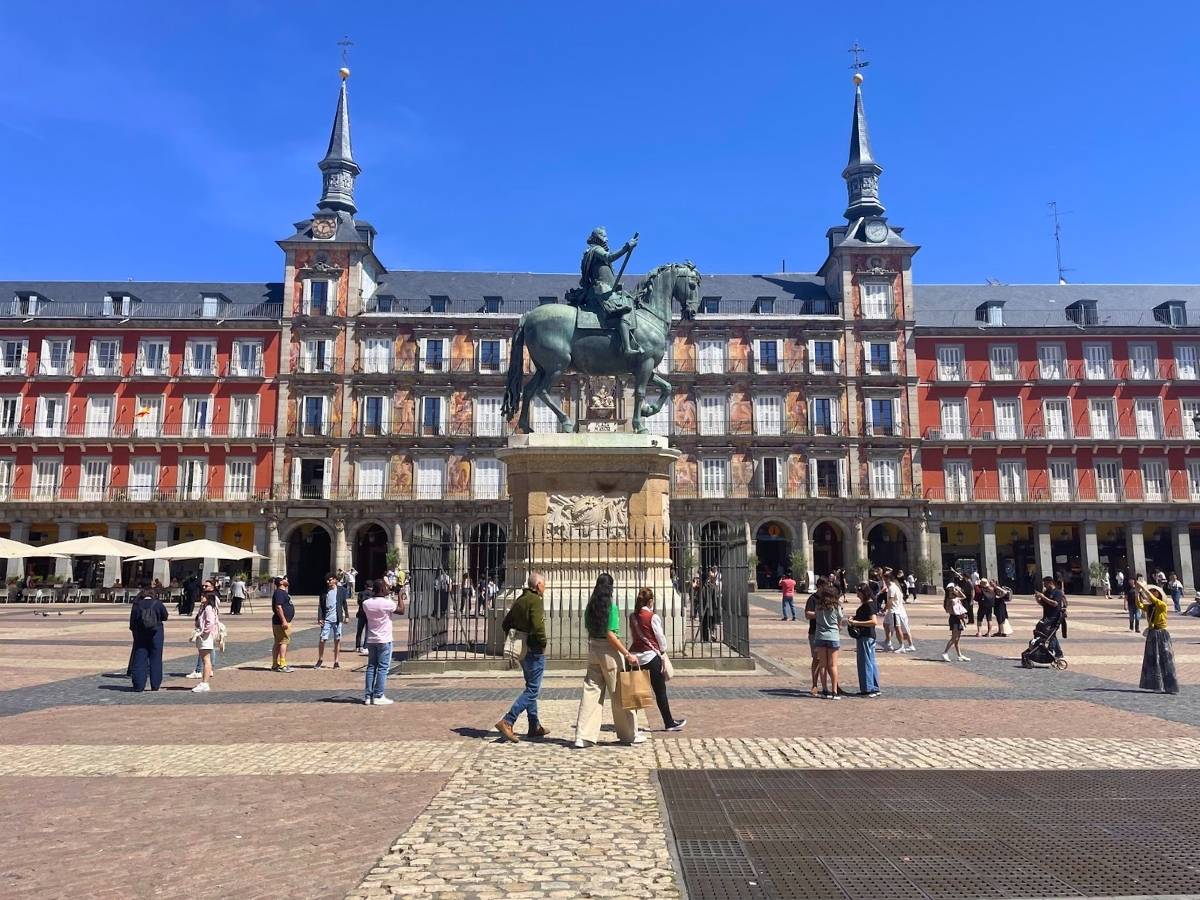
- Plaza Mayor: Continue on to Plaza Mayor, Madrid’s grand central square. It’s worth visiting for the architecture, atmosphere, and photos, but I’d avoid the restaurants here since most of them are tourist traps.
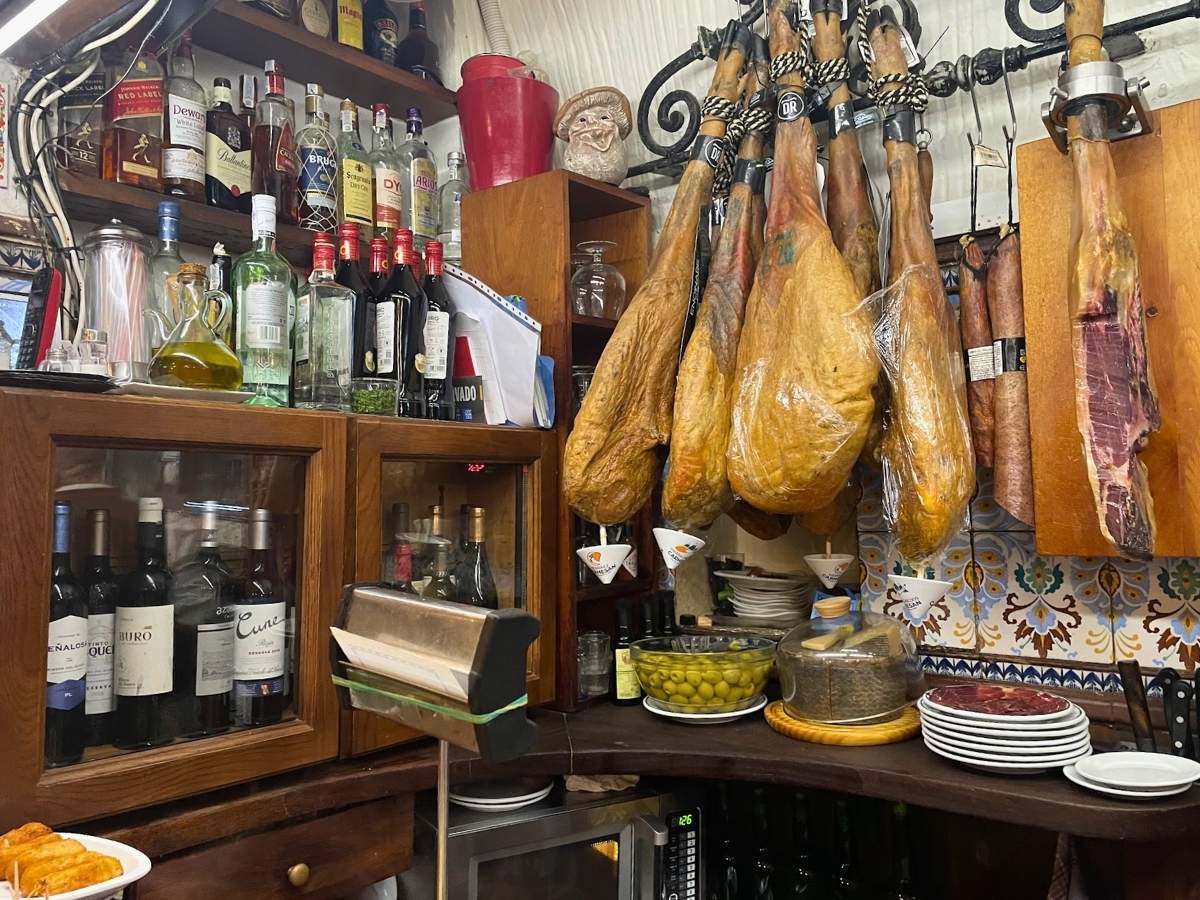
- Mercado de San Miguel: Next, head to Mercado de San Miguel. Yes, it’s a little bougie, but I still think it’s worth visiting. Inside you’ll find everything from tapas and oysters to wine, vermouth, and desserts, which makes it a fun place to sample famous Spanish foods.
- Royal Palace of Madrid: Spend the afternoon visiting the Royal Palace of Madrid, which is the largest royal palace in western Europe. The palace is extremely opulent on the inside and gives you a glimpse into Spain’s royal history. Make sure to book your tickets in advance through the official website, especially during the busy tourist season.
- Almudena Cathedral: Located right next to the Royal Palace, Almudena Cathedral is Madrid’s main cathedral and easy to visit while you’re already in the area.
- Tapas, Taverns & History Tour: End the day with the Tapas, Taverns & History Tour by Devour Tours. This was one of my favorite experiences in Madrid and a fun introduction to the city’s food scene. You’ll visit several traditional taverns, try classic Spanish dishes, and learn about Madrid’s history from a local guide.

Day 6: Madrid
Day 6 is all about experiencing some of Madrid’s most famous landmarks, green spaces, and local food spots.
You’ll explore posh neighborhoods, spend time in Retiro Park, and end the day with dinner at one of the city’s most famous restaurants.
Day 6 Activities:
- Casa Dani: Start your day with breakfast at Casa Dani, located inside Mercado de la Paz in Madrid’s upscale Salamanca neighborhood. They’re famous for their tortilla española, which is honestly one of the best I’ve had anywhere in Spain.
- Puerta de Alcalá: Afterward, walk over to Puerta de Alcalá, one of Madrid’s most recognizable landmarks. The monument sits at the edge of Retiro Park and makes a great photo stop.
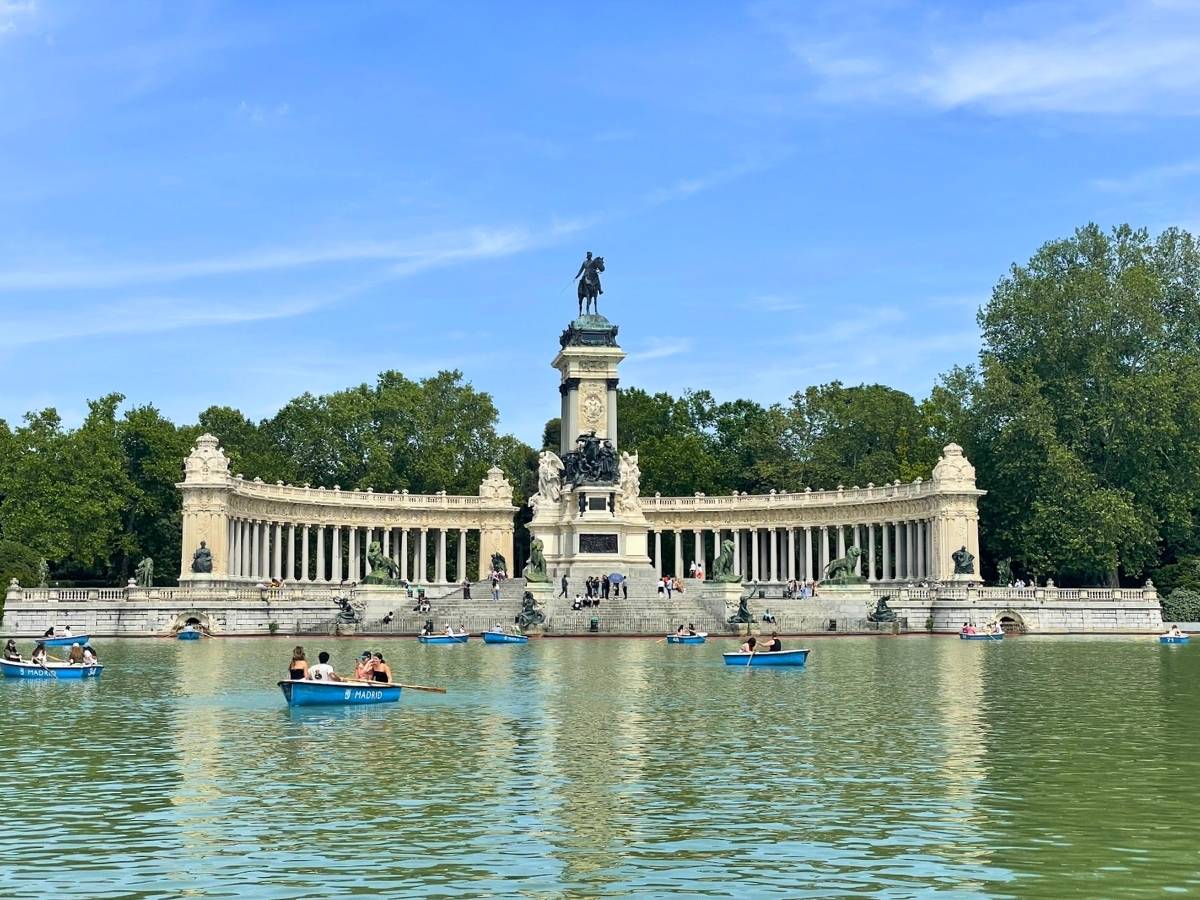
- Retiro Park: Spend some time exploring Retiro Park, Madrid’s most famous green space. You can stroll through the gardens, rent a row boat on the lake, or see the free-roaming peacocks wandering around.
- Prado Museum (Optional): If you’re interested in art, spend a few hours at the Prado Museum, one of the most important art museums in Europe. The collection includes works by famous Spanish artists like Velázquez and Goya.
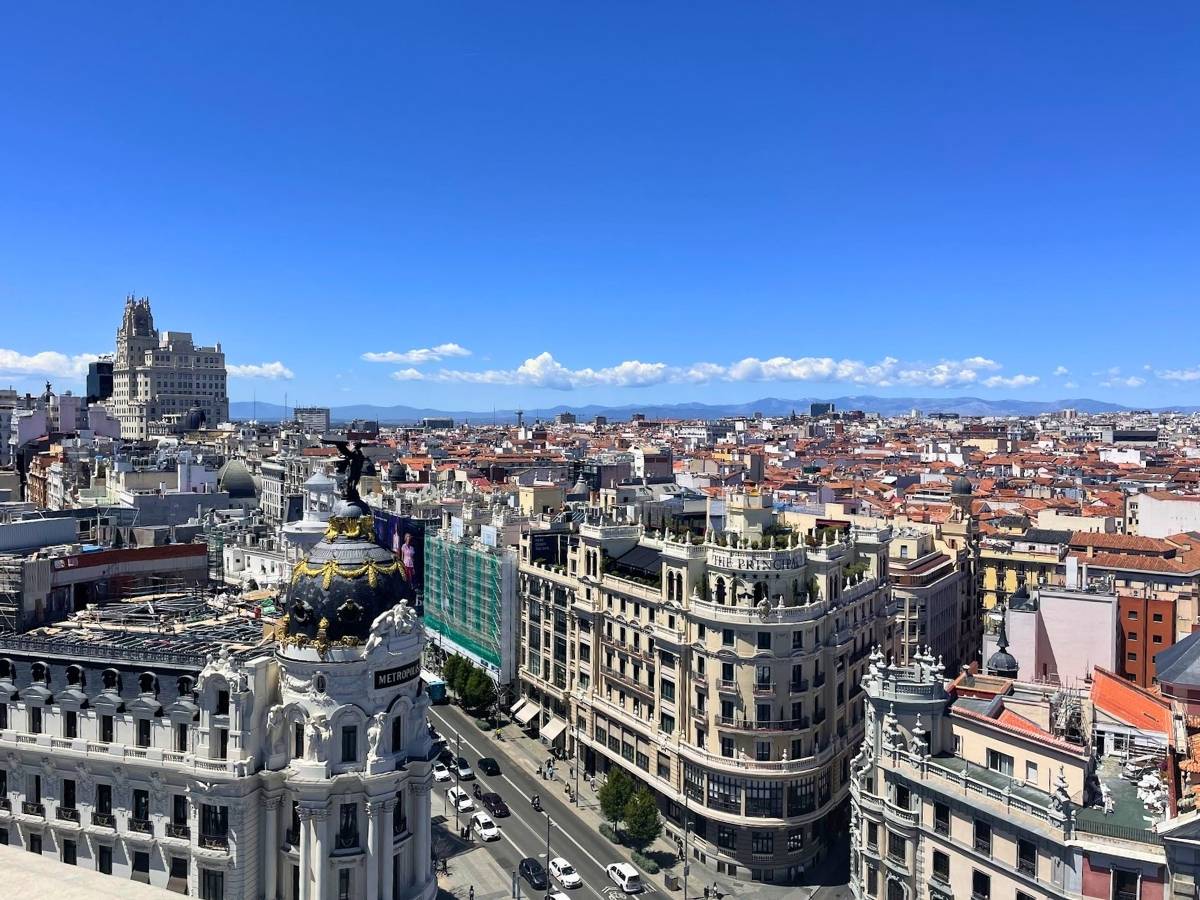
- Azotea del Círculo: Head up to Azotea del Círculo for some of the best rooftop views in Madrid. It’s a great place to grab lunch or a drink while looking out over Gran Vía and the city skyline.
- Shopping on Gran Vía: Spend the afternoon exploring Gran Vía, Madrid’s main shopping street. It’s often compared to Times Square in New York City because it’s a very busy area with restaurants and shopping.
- Dinner at Sobrino de Botín: End your time in Madrid with dinner at Sobrino de Botín, which is supposed to be the oldest restaurant in the world and known for its roast suckling pig. Definitely make a reservation in advance.

Day 7: Travel from Madrid to Seville
On Day 7, you’ll travel to Seville, one of my favorite cities in Spain and the place that many people picture when they think of classic Spanish culture.
After arriving, you’ll have time to explore some of the city’s most beautiful areas before ending the day with tapas and flamenco.
Day 7 Activities:
- Take the Train to Seville: Catch a high-speed train from Madrid-Puerta de Atocha-Alumenda Grandes station to Sevilla-Santa Justa Station, which takes about 2 hours and 45 minutes. I recommend taking a morning train so you can spend the afternoon exploring Seville.
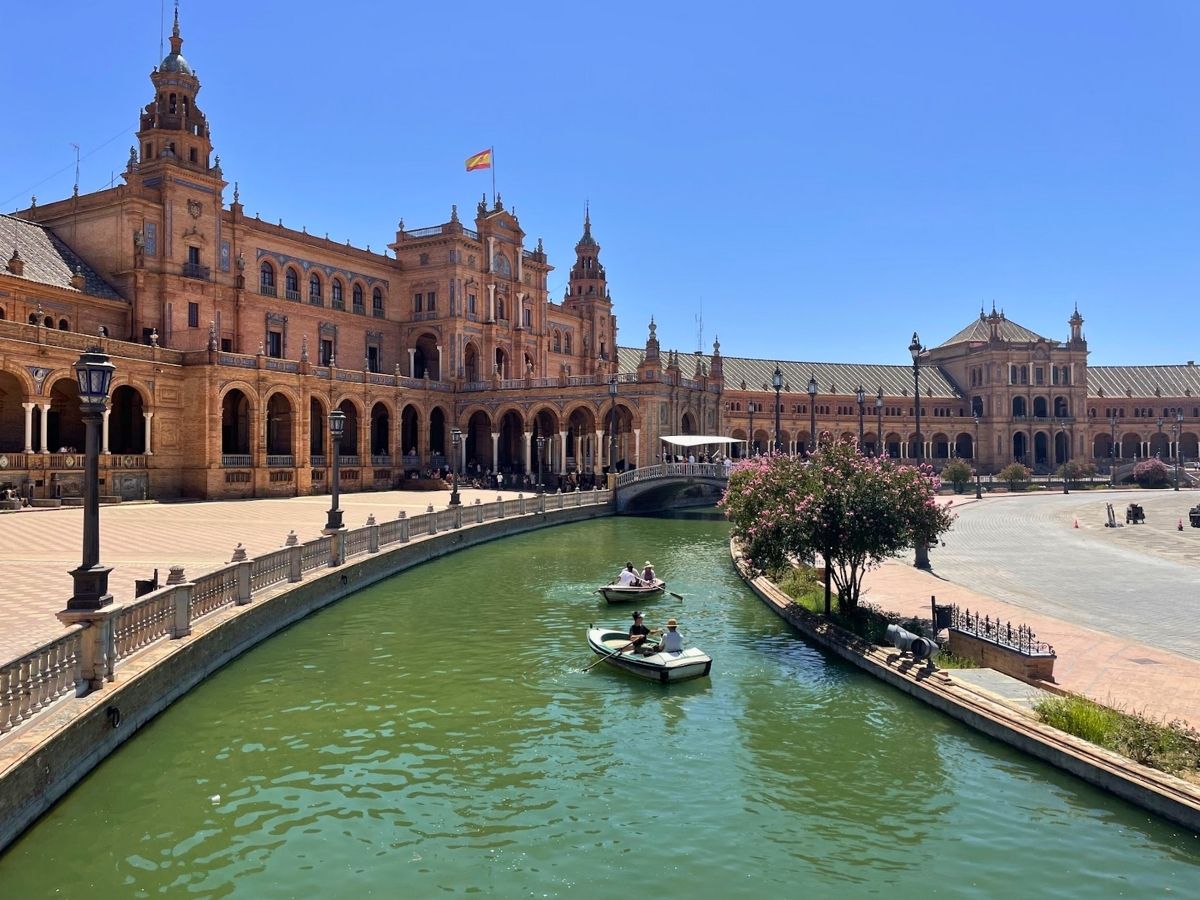
- Plaza de España: Start your sightseeing at Plaza de España, which is honestly one of the most beautiful places I’ve visited in Spain. Built for the 1929 Ibero-American Exposition, the massive plaza features canals, bridges, colorful tilework, and incredible architecture.
- Parque de María Luisa: Located right next to Plaza de España, this beautiful park is a nice place for a stroll. It’s filled with fountains, gardens, palm trees, and shaded pathways that offer a break from the city’s heat.
- Barrio Santa Cruz: Spend the afternoon wandering through Barrio Santa Cruz, Seville’s historic old town. This neighborhood is known for its narrow streets, hidden plazas, and flower-filled courtyards.
- Seville Tapas & Flamenco Tour: End the day with the Seville Tapas & Flamenco Tour by Devour Tours. Seville is considered the birthplace of flamenco and this was honestly the best flamenco show I’ve seen anywhere in Spain. You’ll also visit two local restaurants for tapas and drinks, which makes it a great introduction to Seville’s food scene and flamenco culture.


Day 8: Seville
Day 8 is all about seeing Seville’s most famous landmarks and spending more time exploring the city’s historic center.
You’ll visit the Royal Alcázar and Seville Cathedral, enjoy some excellent local food, and finish the day with one of the best views in Seville.
Day 8 Activities:
- Alone in the Alcázar Tour: Start your day with the Alone in the Alcázar Tour, one of my favorite experiences in Seville. The Royal Alcázar is a stunning palace complex known for its intricate architecture, colorful tilework, beautiful courtyards, and gardens. This early access tour lets you a full hour before the general public, which makes the experience so much more enjoyable.
- Seville Cathedral & La Giralda: Afterward, visit Seville Cathedral, one of the largest Gothic cathedrals in the world and home to Christopher Columbus’s tomb. Be sure to climb La Giralda, the cathedral’s famous bell tower, for some of the best views in Seville. Make sure to book tickets in advance on the official website, or you can book a guided tour if you’d like more context.
- Lunch at Cervecería Giralda: Stop for lunch at Cervecería Giralda, which is right by the cathedral and was built on top of a former Arab bath. Be sure to order the solomillo al whisky, which is a local specialty made with pork loin and a garlicky whisky sauce.
- Triana: Spend the afternoon exploring Triana, one of Seville’s most traditional neighborhoods. If you’re looking for souvenirs from Seville, this is one of the best places to shop for hand-painted ceramics and other locally made products.
- Setas de Sevilla: End the day at Setas de Sevilla, a massive mushroom-shaped wooden structure that has become one of Seville’s most recognizable landmarks. The rooftop walkway is best visited at night during the light show.


Day 9: Day Trip to Córdoba
On Day 9, you’ll take a day trip to Córdoba, one of the most historic cities in Spain.
It’s an easy trip from Seville and gives you a chance to experience a smaller Andalusian city while visiting one of the country’s most impressive landmarks.
Day 9 Activities:
- Take the Train from Seville to Córdoba: Start your day with an early high-speed train from Sevilla-Santa Justa Station to Córdoba-Julio Anguita station, which only takes about 45 minutes.
- Mezquita-Cathedral: Begin your visit at the Mezquita-Cathedral, one of the most impressive buildings in Spain. Originally built as a mosque and later converted into a cathedral, it’s famous for its forest of red-and-white arches and unique blend of Islamic and Christian architecture. Make sure to book tickets in advance on the official website. You can also book a guided tour for more context.
- Patio Tour in San Basilio: Next, join a patio tour in the San Basilio neighborhood. Córdoba is famous for its flower-filled courtyards, and visiting a few of them is one of the best ways to experience the city’s culture and traditions.
- Walk Across the Roman Bridge: Take a stroll across Córdoba’s Roman Bridge, one of the city’s most recognizable landmarks. The bridge offers great views of the Mezquita-Cathedral and the Guadalquivir River.
- Lunch at Casa Pepe de la Judería: Stop for lunch at Casa Pepe de la Judería, which is a Michelin-recommended restaurant that’s still affordable. It’s located right in the historic center and is a great place to try local Andalusian dishes.
- Explore the Jewish Quarter: Spend the afternoon wandering through Córdoba’s Jewish Quarter. This area is one of the most picturesque parts of the city known for its flower pot-lined streets, whitewashed buildings, and charming plazas.
- Take the Train Back to Seville: In the late afternoon or evening, take the train back to Seville and enjoy your final night in Andalusia.


Day 10: Depart from Seville
Day 10 is the end of your trip and time to head home. Check out of your hotel and make your way to Seville Airport if you’re flying home from Seville.
Alternatively, if you’ve booked your return flight from Madrid, take the high-speed train back to Madrid-Atocha Station and continue on to Madrid Airport for your flight home.
Recommended Hotels for This Spain Itinerary
Now that you have an overview of the itinerary, here are some hotel and neighborhood recommendations for each city.
Where to Stay in Barcelona
In Barcelona, I’d recommend staying in Eixample, the Gothic Quarter, or El Born.
If you stay in the Gothic Quarter or El Born, try to choose a hotel on or near a main road because the narrow streets can feel a little sketchy at night.
Here are a few of my top hotel picks in Barcelona:
↳ You can read my full guide on where to stay in Barcelona for more info.

Where to Stay in Madrid
In Madrid, I’d recommend staying near the Gran Via, Sol, or Barrio de las Letras neighborhoods to be within easy walking distance to the main attractions.
Here are a few of my top hotel picks in Madrid:
↳ You can read my full guide on where to stay in Madrid for more info.

Where to Stay in Seville
In Seville, I’d recommend staying in the Centro, El Arenal, or Barrio de Santa Cruz neighborhoods. Here are a few of my top hotel picks in Seville:
↳ You can read my full guide on where to stay in Seville for more info.

Spain 10-Day Itinerary Variations
While I think the itinerary above is the best option for most first-time visitors, there are lots of ways to customize it depending on your interests. Here are a few alternative routes to consider:
Barcelona, Valencia, and Madrid
If you’d rather spend less time moving between cities, consider swapping Seville for Valencia.
Valencia offers beautiful architecture, excellent food, beaches, and attractions like the City of Arts and Sciences while still being easy to reach by train from Barcelona and Madrid.

Barcelona, Madrid, and Granada
If visiting the Alhambra is high on your Spain bucket list, consider replacing Seville with Granada.
You’ll still experience two of Spain’s biggest cities while also getting a taste of Andalusia and one of the country’s most famous landmarks.

Barcelona, Madrid, Seville, and Granada
If you don’t mind moving a little faster, you can add Granada to the original itinerary. I’d recommend taking one night away from either Barcelona or Seville to fit it in.
This option allows you to visit many of Spain’s most iconic destinations, including the Alhambra, but it does make the trip feel a bit more rushed.

Quick Tips for Visiting Spain
Here are a few Spain travel tips to know before visiting:
- Book tickets in advance: Many of Spain’s most popular attractions, including La Sagrada Familia, Park Güell, the Royal Palace of Madrid, the Royal Alcázar in Seville, and the Mezquita-Cathedral in Córdoba, regularly sell out. I recommend booking your tickets several weeks in advance whenever possible.
- Don’t come without a phone leash: Pickpocketing is one of the most common issues tourists face in Spain, and it’s the worst in Barcelona. A phone leash is one of the easiest ways to protect your phone and gives me much more peace of mind when traveling.
- Adjust your dining times: Spaniards typically eat lunch between 2:00PM and 4:00PM and dinner between 8:00PM and 10:00PM. While tourist restaurants may serve food all day, you’ll have the best experience if you adjust your schedule to local dining hours.
- Don’t eat paella for dinner: Paella is traditionally a lunch dish in Spain, not dinner. Many restaurants that serve paella late at night cater primarily to tourists, so you’ll usually find more authentic options during lunchtime.
- Beware of photo menus: Restaurants with large photo menus displayed outside are usually tourist traps. While there are exceptions, I generally recommend looking for restaurants with Spanish menus and local customers instead.

Spain Itinerary: FAQs
Here are some of the most frequently asked questions about planning a Spain itinerary:
Is 10 days enough in Spain?
Yes, 10 days is enough in Spain to visit several of the country’s most iconic destinations and experience its food, culture, history, and architecture. While you’ll only scratch the surface, it’s enough time for a first trip.
What is the best time to visit Spain?
The best time to visit Spain is during May, June, and September when temperatures are pleasant and crowds are generally smaller. Summer can be very hot, especially in cities like Madrid, Seville, and Córdoba.
Should you rent a car or take the train in Spain?
For this itinerary, I recommend taking the train in Spain rather than renting a car. Spain’s high-speed rail network is fast, comfortable, and connects all of the major destinations included in this itinerary. Renting a car is better if you plan to visit smaller towns.
How do you book train tickets in Spain?
The easiest way to book train tickets in Spain is directly through the Renfe, Iryo, or Ouigo websites, or by using Omio to compare schedules and prices across all three companies. Check out my guide to buying train tickets in Spain for step-by-step instructions.
How much luggage can you take on the trains in Spain?
Most trains in Spain allow passengers to bring multiple bags, including large suitcases, without paying extra baggage fees. However, luggage policies vary slightly between Renfe, Iryo, and Ouigo depending on your fare, so it’s important to check the rules before you travel.

Final Thoughts: 10 Days in Spain Itinerary
I hope this 10-day Spain itinerary has helped you plan your trip and feel more confident about where to go, what to do, and how to get around!
By focusing on Barcelona, Madrid, Seville, and Córdoba, you’ll get to experience some of Spain’s most famous sights, food, architecture, and cultural traditions without feeling rushed.
You can check out my other city-specific travel guides for more information, hotel recommendations, and tips:

