
Is Seville Worth Visiting in 2026? Travel Guide + Tips

Are you planning a trip to Spain and wondering if Seville is worth visiting? You’re in the right place!
I live in Spain and have explored many cities across the country, and I can honestly say Seville is one of the most beautiful places I’ve been.
In this Seville travel guide, I’ll share why it’s worth a visit, what makes it special, the top things to do, the best time to visit, and practical tips to help you plan your trip.
You’ll also get my honest opinion on who Seville is best for and what to expect. Let’s get into it!
Is Seville Worth Visiting?
Yes, Seville is absolutely worth visiting. It’s one of the most beautiful cities I’ve been to in Spain, with palm trees, sunny weather, flamenco, and stunning architecture everywhere you look.
What I love most is how charming and photogenic it is—you’ll literally want to stop for a photo at almost every turn!
Top sights include the Royal Alcazar, Seville Cathedral, La Giralda, and Plaza de España, all located in a safe and walkable city center.
The only downside is that it gets extremely hot in summer and there’s no beach, but if you can handle the heat, it’s definitely worth adding to your Spain itinerary.

What is Seville Like?
Seville has a warm, laid-back vibe with stunning architecture and a long, layered history shaped by Roman, Islamic, and Christian influences.
It’s exactly what you picture when you think of Spain, with orange trees, flamenco, colorful tiles, and palm-lined streets.
The Guadalquivir River runs through the city, and all the top attractions are within easy walking distance.
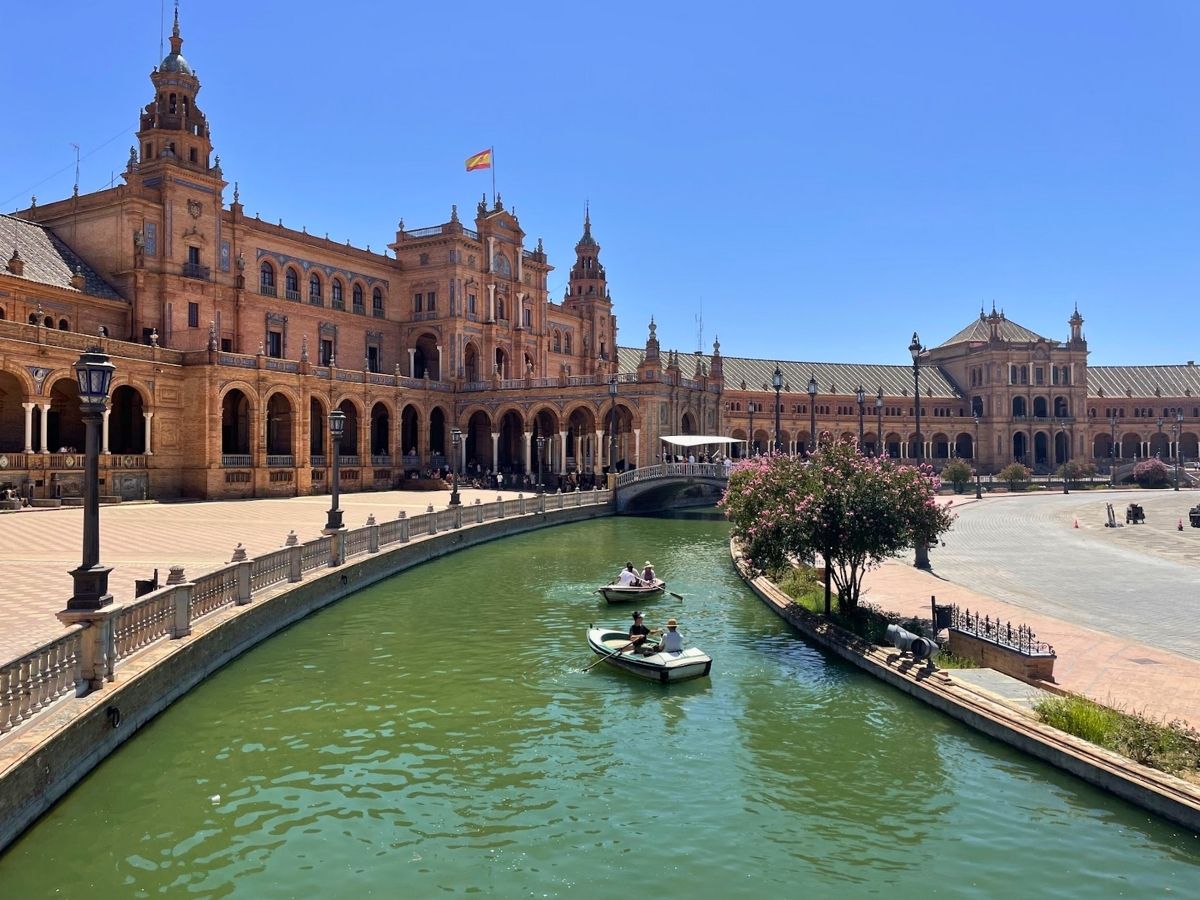
You’ll find some of the most iconic landmarks in Spain here, like the Royal Alcazar, Seville Cathedral, and the incredibly photogenic Plaza de España, which is one of the most beautiful spots in the entire city.
Just keep in mind that it’s one of the hottest cities in Europe, so if you’re visiting in the summer, be prepared for serious heat with temperatures often reaching over 100°F (37°C).

Is Seville Safe to Visit?
Seville is generally very safe to visit, and I felt completely comfortable exploring the city as a solo female traveler, even at night.
Like the rest of Spain, it falls under a Level 2 travel advisory from the U.S. Department of State due to terrorism and civil unrest, but that’s standard for most of Europe.
You’ll still want to take basic precautions, but the risk of pickpocketing and petty theft is definitely not as extreme as in Barcelona.
I’d still recommend using a crossbody purse or belt bag along with a phone leash just to be safe, but Seville is much more relaxed when it comes to petty crime and generally feels very low-stress for travelers.

Reasons to Visit Seville
Here are the top reasons to visit Seville Spain:
- Classic Andalusian Atmosphere: Seville is what many people imagine when they think of Spain, with flamenco dancers, orange trees, and colorful tilework around every corner.
- Incredible Architecture: From the Royal Alcazar to the Seville Cathedral and Plaza de España, the city is full of jaw-dropping buildings that blend Moorish, Gothic, and Renaissance styles.
- Great for Walking: The historic center is compact and easy to explore on foot, with lots of hidden courtyards, quiet plazas, and scenic streets to wander.
- Live Flamenco Shows: Seville is considered the birthplace of flamenco, and there are many intimate venues where you can experience this powerful art form up close.
- Amazing Tapas Scene: With hundreds of tapas bars across the city, it’s easy to hop from place to place trying local favorites like salmorejo (cold vegetable soup), solomillo al whisky (pork with whisky sauce) , and espinacas con garbanzo (spinach with chickpeas).
- Unique Cultural Blend: The city’s long history of Roman, Islamic, and Christian influence gives it a one-of-a-kind character you won’t find anywhere else in Spain.
- Stunning Plaza de España: One of the most beautiful public squares in Europe, this semi-circular plaza is surrounded by tiled bridges, fountains, and shaded walkways.
- Warm and Sunny Weather: Seville gets sunshine almost year-round, which makes it a great destination in spring, fall, or even winter.
- Fewer Crowds than Madrid or Barcelona: While still popular, Seville tends to feel less overwhelming than Spain’s larger cities.
- Strong Local Identity: From its festivals to its food, Seville has a proud local culture that really shines through and makes the city feel special.

Plan your trip in minutes with my pre-pinned Google Map filled with the best attractions, restaurants, bars, flamenco, and hidden gems in Seville.
- 60+ pre-pinned places so you don’t waste hours planning
- Filter by category to find food, sights, and local favorites
- Personal notes with insider tips for each spot

Who Is Seville Best Suited For?
Seville is perfect if you’re looking for that classic Spain experience with flamenco, tapas, and beautiful historic landmarks.
It’s a great choice if you love architecture, history, and exploring walkable cities with a strong local feel, and it offers a slower pace than larger cities like Madrid or Barcelona.
It’s also well-connected by train, making it an easy stop on any southern Spain itinerary.

Where is Seville?
Seville is located in the region of Andalusia, a large area in southern Spain known for its flamenco, Moorish architecture, and whitewashed villages.
It’s an inland city, but the Guadalquivir River runs through it and connects to the Atlantic coast.
Seville is about 2 hours and 45 minutes from Madrid by high-speed train, which makes it easy to get to from international cities.

How to Get to Seville
You can get to Seville by flying or taking the train.
Seville Airport (SVQ) handles domestic and some international flights, but most travelers fly into Madrid or Barcelona first, then connect to Seville.
If you’re already in Spain, the easiest and most comfortable option is the high-speed train, with Renfe offering frequent service from cities like Madrid, Granada, and Málaga.
To get to Seville from Barcelona, you can fly or take the train. However, the train is about 6 hours so it’s a bit more convenient (and sometimes cheaper) to fly on a budget airline like Vueling or Ryanair.

Best Time to Visit Seville
The best time to visit Seville is in spring or fall, when the weather is warm but not overwhelming.
Summer should be avoided if possible, since temperatures regularly climb over 100°F (37°C) and sightseeing in the heat can be tough.
That said, I visited in July and still had a great time. You just need to be prepared for some serious heat, stay hydrated, and plan for indoor breaks.
I also brought an electronic hand fan, which was a huge lifesaver!
Winter is also a good option, with cooler temps and fewer crowds. Just keep in mind that spring can sometimes bring rain, so it’s good to pack accordingly.

Best Things to Do in Seville Spain
If you’re wondering what to do in Seville, here are a few of the top activities:
- Explore the Royal Alcazar: The Royal Alcazar is a stunning royal palace filled with colorful tilework, intricate arches, and peaceful gardens. It’s one of the top places to see in Seville and a must for first-time visitors.
- Climb La Giralda and visit Seville Cathedral: Recognized as a UNESCO World Heritage site, the Seville Cathedral is one of the largest in the world and home to Christopher Columbus’s tomb. You can climb the ramp to the top of La Giralda tower for sweeping views of the city.
- Walk around Plaza de España: Built for the 1929 Ibero-American Exposition, this impressive square is known for its canal, bridges, and detailed tilework representing each province of Spain.
- See a live flamenco show: Seville is one of the very best places in Spain to experience flamenco. There are lots of intimate venues around the city where you can see powerful performances up close.
- Visit Las Setas de Sevilla: This massive mushroom-shaped wooden structure offers a shaded walkway, stunning views, and a nighttime light show from its elevated terraces. It’s an unexpected modern contrast to Seville’s historic charm.
- Get lost in Barrio Santa Cruz: This historic neighborhood is full of narrow streets, hidden plazas, and whitewashed buildings. It’s the perfect area to wander without a plan and take in the atmosphere.

Where to Stay in Seville
If you’re wondering where to stay in Seville, here are a few recommendations:
Tip: I’d recommend staying in Centro (Old Town) to be within walking distance to all the major attractions.

Tips for Visiting Seville
Follow these tips to make the most of your Seville visit:
- Avoid visiting in summer if possible: Temperatures regularly hit over 100°F (37°C), which can make sightseeing uncomfortable if you’re not used to the heat.
- Be prepared for the weather: If you are visiting in warmer months, pack an electronic hand fan, refillable water bottle, sunscreen, and even a small umbrella to use as shade.
- Book tickets online in advance: Top attractions like the Seville Cathedral & La Giralda and the Royal Alcazar often sell out, especially in spring and fall.
- Try the Alone in Alcazar tour: I did this Alone in the Alcazar tour myself and it was hands down the best way to experience the palace before it gets crowded.
- Visit Plaza de España early: Head there before 9am to enjoy it while it’s calm and nearly empty. It’s a great time for photos too.
- Be prepared for siesta hours: Some local shops and businesses still close in the afternoon, typically from 2 to 5 PM. It’s something to keep in mind if you’re planning to explore or shop during that time.
- Don’t miss Triana: This neighborhood across the river is known for its ceramic tile shops and local vibe. It’s also a good place to grab a casual bite.
- See a flamenco show: I went to this flamenco show and it was honestly the best performance I’ve seen in Spain. The setting was intimate and the energy was unreal.
- Try local drinks: Tinto de verano is one of the most famous drinks in Spain, and a lot more popular with locals than sangria. Sherry is also a classic drink to try in Seville. And if you like beer, Cruzcampo is a local beer from Seville.

Visiting Seville Spain: FAQs
Here are the answers to some of the most frequently asked questions about visiting Seville:
What is so great about Seville?
Seville is full of history, colorful architecture, great food, and a strong local culture that feels uniquely Spanish. It’s one of the most beautiful and photogenic cities in the country.
Is Seville or Barcelona better?
Barcelona is bigger and has a beach, while Seville feels more traditional and laid-back. It depends on what you’re looking for, but Seville is a favorite for those wanting a classic Spain experience.
Why do people visit Seville?
People visit Seville for its historic sites, flamenco shows, stunning architecture, and relaxed pace. It’s a great place to soak up Andalusian culture and explore on foot.
Is Seville a walkable city?
Yes, Seville is very walkable. Most major attractions are close together, and the city center is easy to navigate on foot.
Is Seville safe for solo travelers?
Yes, Seville is generally very safe, and I felt completely comfortable exploring alone, even at night. Just take normal precautions like you would in any city.
How many days is enough in Seville?
Two to three days is enough to see the main sights and enjoy the city at a relaxed pace. If you want to include day trips or take things slower, plan for four days.

Final Thoughts: Is Seville Spain Worth Visiting?
I hope this guide helped you decide if Seville is the right destination for your trip!
With its stunning architecture, strong local culture, great food, and walkable layout, it’s a city that truly feels like the heart of southern Spain.
Just be mindful of the summer heat and plan ahead for popular attractions.
It’s honestly one of the most beautiful cities I’ve visited in Spain, and my only regret is not going sooner!
READ NEXT:

