
15 Must-See Places in Seville Spain You Shouldn’t Miss


Wondering what the must-see places in Seville are for your upcoming trip? You’re in the right place!
I live in Spain and recently explored Seville, and I can confidently say there are some beyond gorgeous spots you simply can’t skip.
This guide highlights the city’s top landmarks, beautiful plazas, and local favorites that are worth your time.
Let’s take a closer look at the best places to see in Seville.
Must-See Places in Seville Spain
These are the top things to see in Seville Spain:
1. Seville Cathedral & La Giralda
Starting at the top of the list has to be Seville Cathedral, a massive site that is one of the largest Gothic cathedrals in the world and a UNESCO World Heritage Site.
It honestly feels a bit like St. Peter’s Basilica in Vatican City, just with dramatic Gothic arches and darker interiors.
Inside, you’ll find dozens of side chapels and rooms to explore, plus the tomb of Christopher Columbus, which is pretty cool to see.
Connected to the cathedral is La Giralda, the bell tower, which you can climb using 35 ramps instead of stairs.
It’s actually much easier than it sounds and totally worth it for the city views at the top.
One ticket gets you access to both, and it includes an audioguide to help you understand what you’re seeing. Just be sure to book online in advance, because tickets often sell out.

2. Royal Alcázar
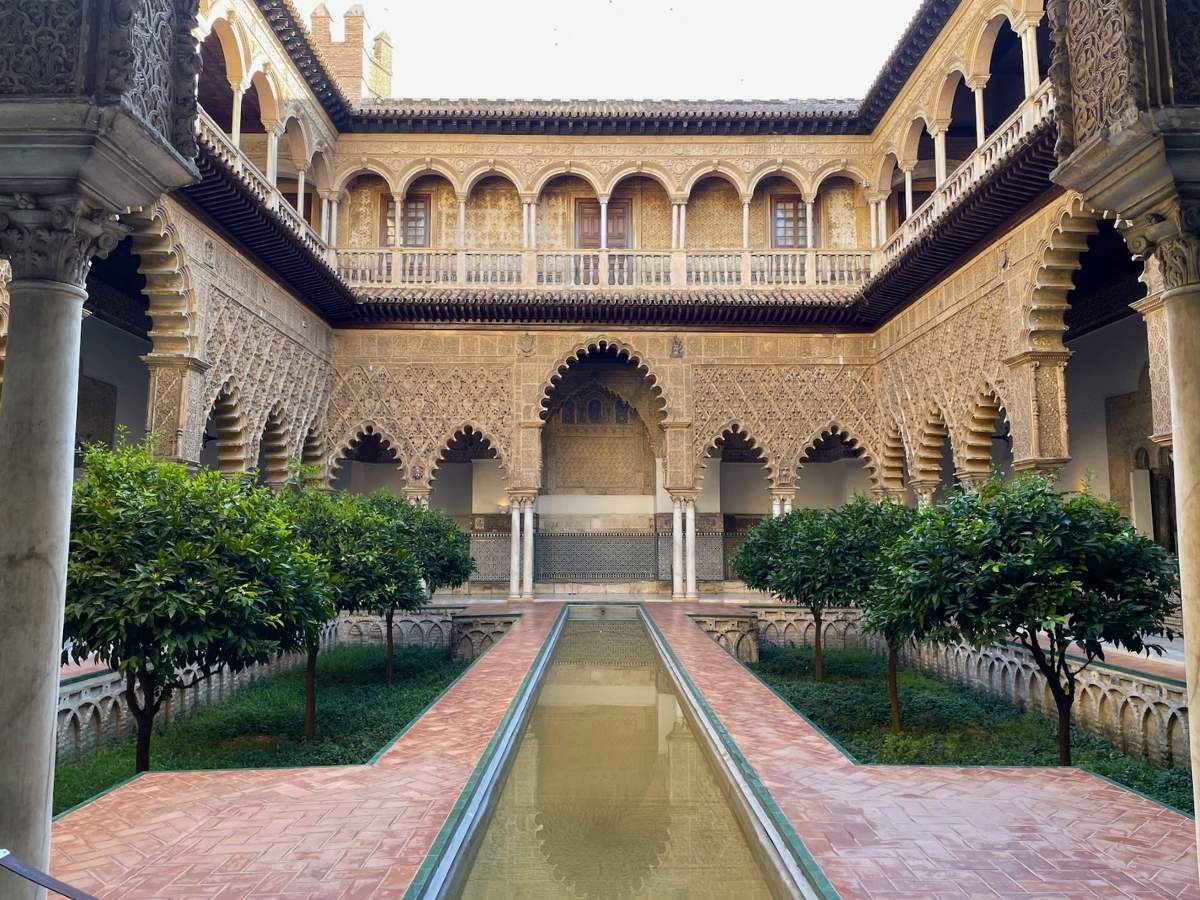
The Royal Alcázar (“Real Alcázar” in Spanish) is a stunning royal palace with a long history dating back to the 10th century.
Originally built as a Muslim fortress, it was later expanded by Christian kings and is still used by the Spanish royal family when they visit Seville.
The architecture is a mix of Islamic, Mudéjar, and Gothic styles, and the gardens are absolutely beautiful to wander through.
I did this Alone in the Alcázar tour and honestly can’t recommend it enough—it gives you early access before the palace opens to the public, and being inside with just a small group was unforgettable.
If you want to experience the palace without the crowds, it’s 100% worth it.
3. Plaza de España
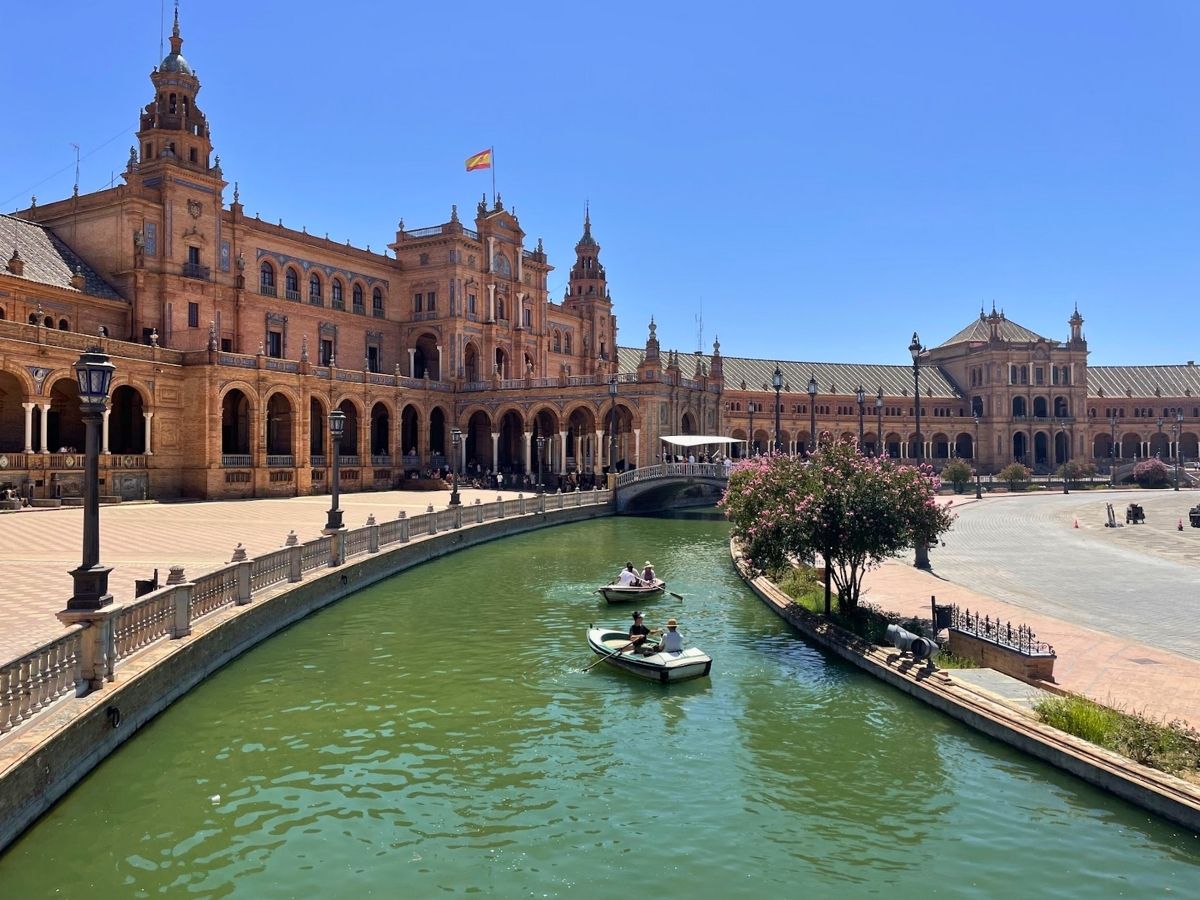
Plaza de España is a massive square built for the Ibero-American Exposition of 1929 and one of the most famous monuments in Spain.
It has beautiful tiled benches representing each Spanish province, four colorful bridges, pink flower trees, and a canal where you can rent a rowboat.
Horse-drawn carriages also circle the plaza, which adds to the classic Spanish feel.
The details (especially the blue mosaic tiles) are incredible and make every corner feel photo-worthy.
It’s honestly one of the prettiest places I’ve seen in Spain and I probably took about 1,000 photos while I was there!
Plan your trip in minutes with my pre-pinned Google Map filled with the best attractions, restaurants, bars, flamenco, and hidden gems in Seville.
- 60+ pre-pinned places so you don’t waste hours planning
- Filter by category to find food, sights, and local favorites
- Personal notes with insider tips for each spot

4. Parque de María Luisa
María Luisa Park is right next to Plaza de España, so it’s an easy and relaxing stop afterward.
This large public park is full of shady paths, fountains, and tiled benches, which makes it a great place to take a break from the sun.
You’ll also find some interesting buildings like the Museum of Popular Arts and Traditions inside the park.
It’s a peaceful spot to slow down, have a snack, or just enjoy the greenery for a bit before continuing your day.

5. Archivo de Indias
The Archivo de Indias is a historical archive that holds thousands of documents related to Spain’s exploration and colonization of the Americas.
Housed in a 16th-century building near the cathedral, it was created to centralize all records of the Spanish Empire’s overseas territories.
Inside, you’ll find original writings from important figures like Christopher Columbus and Hernán Cortés.
It’s also recognized as a UNESCO World Heritage site for its historical importance and well-preserved architecture.
It’s free to go inside, so it’s an easy and interesting stop while exploring the city center.

6. Ayuntamiento de Sevilla
The Ayuntamiento de Sevilla is the city’s historic town hall, located in Plaza Nueva and easy to admire while exploring the city center.
Built in the 1500s, it features detailed stone carvings and a mix of architectural styles–there’s even one side of it that was never completed.
And if you look closely at the façade, you’ll spot figures of Hercules and Julius Caesar, both considered legendary founders of Seville.
The building isn’t typically open for visitors, but it’s still a beautiful and worthwhile stop from the outside.

7. Setas de Sevilla
Setas de Sevilla, also called the Metropol Parasol, is a giant mushroom-shaped structure made of wood in Plaza de la Encarnación.
It’s one of the more modern sights in the city and definitely stands out from everything else you’ll see in Seville.
I went during the day and while it was cool to walk on the elevated pathways and see the views, it didn’t totally blow me away.
I’ve heard it’s way better at night when the light show is happening, so I’d recommend going then if you can.
Your entry ticket also includes a short immersive video about Seville that’s worth checking out.

8. Torre del Oro
Torre del Oro is a 13th-century watchtower located right along the Guadalquivir River.
It was originally built by the Moors to control access to the city by water and later used to store treasures brought back from the Americas.
The name means “Tower of Gold,” which may come from the golden reflection it gave off when sunlight hit its tiled walls.
Today, it houses a small naval museum and offers nice views from the top if you feel like climbing the stairs.
Even if you don’t go inside, it’s easy to see while walking along the river.

9. Royal Tobacco Factory of Seville
The Royal Tobacco Factory of Seville is a huge building just a short walk from Plaza de España.
It was built in the 1700s and used to be one of the biggest tobacco factories in Europe, with thousands of women working here rolling cigars.
If you’ve seen the famous opera Carmen, this is where her character worked and it’s a big part of the story.
Nowadays, the building is part of the University of Seville, but you can still walk around and explore the courtyards for free during the week.

10. Casa de Pilatos
Casa de Pilatos is a beautiful old palace that mixes different styles like Mudéjar and Renaissance, and it’s honestly one of the most peaceful spots I visited in Seville.
It definitely felt like a hidden gem when I went–there were only a few other people around so I basically had the place to myself.
The courtyards are seriously gorgeous, with fountains, trees, and colorful flowerpots all perfectly arranged.
The entrance ticket includes an audioguide, which makes it easy to learn more as you walk around.
If you’re into pretty architecture and quiet corners, this one’s worth checking out.
11. Seville Museum of Fine Arts
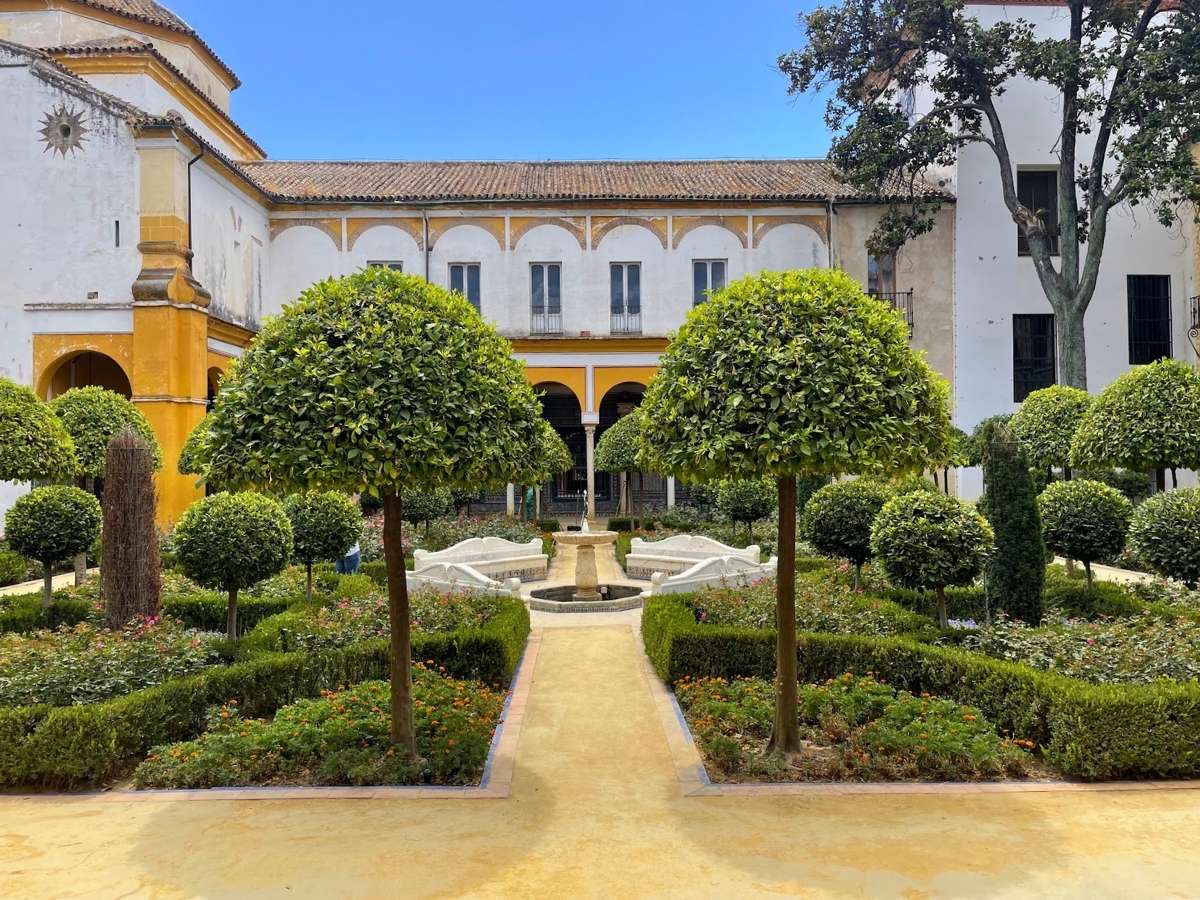
The Seville Museum of Fine Arts (Museo de Bellas Artes) is one of the best art museums in Spain, especially if you’re into Baroque paintings.
It’s inside a former convent, which gives it a cool atmosphere with quiet courtyards and pretty archways.
You’ll find works by artists like Murillo and Zurbarán, along with a few surprises from El Greco and others.
Entry is only €1.50, and it’s free if you’re from the EU. It’s a nice, low-key stop when you want a break from the heat or the crowds.

12. Mercado de Triana
Mercado de Triana is a local food market just across the river in the Triana neighborhood, one of the coolest areas to explore in Seville.
You’ll find everything from fresh seafood and produce to cheese, jamón, and little tapas bars where you can grab a snack.
It’s a fun spot to walk around, people-watch, and try some local flavors.
After the market, head into the nearby streets to check out the ceramics shops.
Triana is known for its pottery, and you’ll see tons of colorful tiles and hand-painted pieces that make great souvenirs from Seville.

13. Church of St. Ildephonse
The Church of St. Ildephonse (Iglesia de San Ildefonso) is a beautiful pink and orange-hued church in the Alfalfa neighborhood, just a short walk from the city center.
It was built in the late 1700s after an older church on the site was damaged in the Lisbon earthquake.
The twin towers and colorful façade really stand out, and it’s one of those spots that makes you stop and grab a photo.
The inside is nice too, but honestly, the outside is what makes it special. It’s a quiet little corner that feels more local and less touristy.

14. Jewish Quarter
The old Jewish Quarter, or Barrio Santa Cruz, is one of the oldest and most historic areas in Seville.
It was home to a large Jewish community until the late 1400s, when they were forced out following years of persecution and violence.
Today, the neighborhood’s winding streets, quiet plazas, and whitewashed buildings still carry traces of that past.
You’ll find hidden patios, flower-filled balconies, and spots that are incredibly photogenic. It’s the main tourist area in Seville and a nice place for a stroll.

15. Patio de Banderas
Patio de Banderas is a quiet little square right next to the Royal Alcázar, lined with orange trees and benches, which is perfect for a quick break after sightseeing.
It’s got a great view of La Giralda tower in the background and feels super peaceful compared to the nearby crowds.
In the corner of the square, there’s a small free museum called Fundación Biodiversidad that not many people know about.
Head inside and up to the rooftop for some really nice views of the square and La Giralda. It’s a hidden gem and totally worth a quick stop.

Final Thoughts: Must-Visit Places in Seville Spain
I hope this list helped you get a better idea of the best places to visit in Seville Spain!
From major landmarks in Seville like the Seville Cathedral, Royal Alcázar, and Plaza de España to hidden gems like Casa de Pilatos, there’s so much worth checking out.
And the great thing is that everything is within easy walking distance so you can explore all the main Seville attractions on foot.
I have no doubt you will fall in love with Seville!
READ NEXT:

